20 Best Street Foods to Try in Istanbul (Ultimate Guide)
This post contains affiliate links. If you click and make a purchase, I may earn a small commission at no extra cost to you. See my Privacy Policy for more information.
If you’re looking for a guide to the best Turkish street food to try in Istanbul, you’re in the right place!
Istanbul is famous for its incredible street food scene and trying it is one of the highlights of visiting the city. The food in Istanbul reflects the city’s unique position between Europe and Asia, with flavours and traditions influenced by both continents.
Before travelling to Turkey, I was already familiar with a few Turkish street foods, with gözleme and pide being some of my favourites. I couldn’t wait to try them in Istanbul and to discover dishes I’d never even heard of before.
Eating street food in Istanbul is a fantastic way to connect with Turkish culture, and it’s also very budget friendly.
This guide will walk you through the must-try street foods in Istanbul, from familiar favourites like kebabs, gözleme, and pide to more unique dishes such as midye dolma and çiğ köfte, as well as delicious desserts like baklava.
🍢 Best Street Food in Istanbul
1. Simit
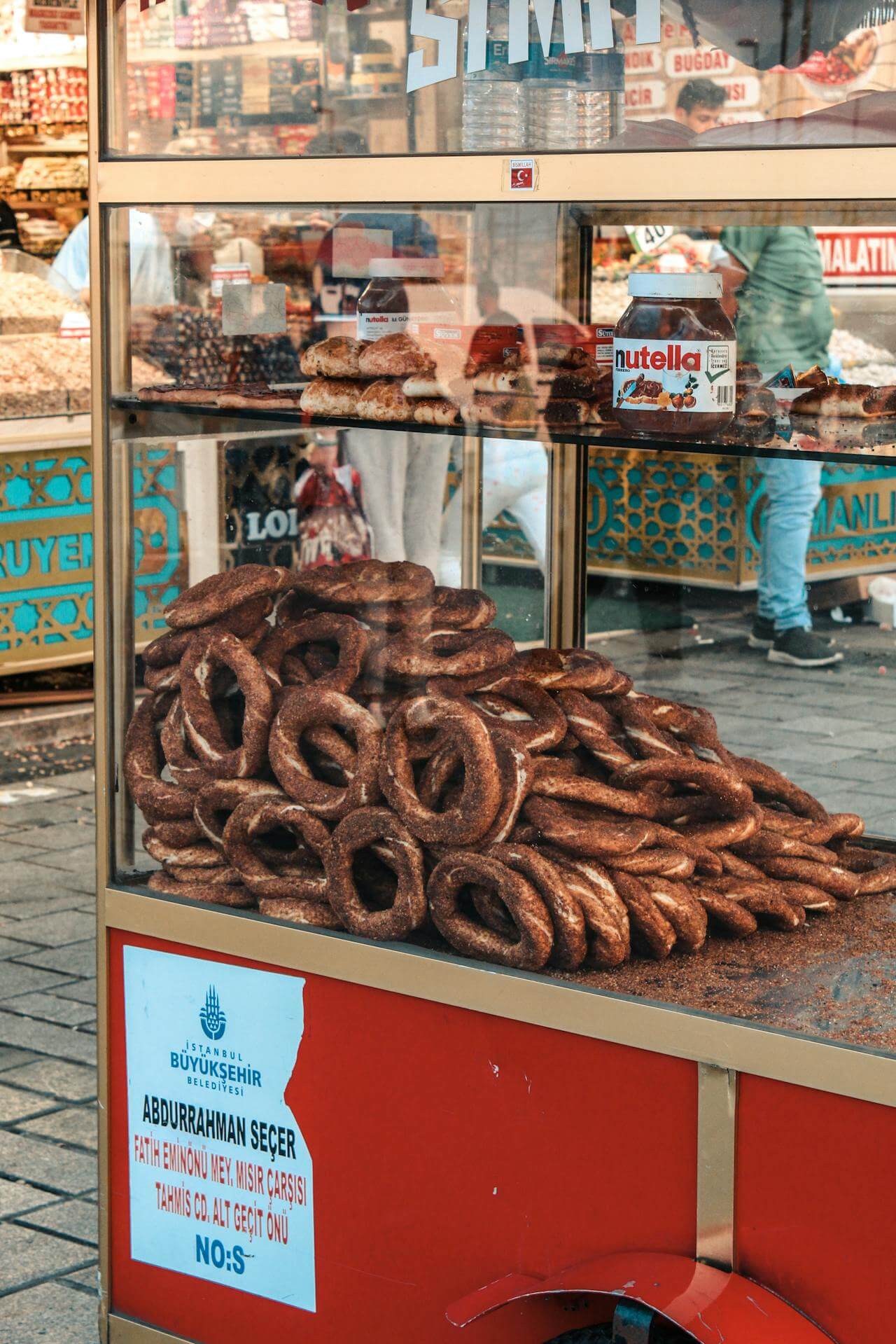
Simit is one of the most recognisable street foods in Istanbul and is found not only across the city but throughout Turkey.
This ring-shaped bread is often compared to a bagel or pretzel, although simit has a firmer crust and a dense, chewy interior. It’s typically coated in toasted sesame seeds or poppy seeds.
Simit is commonly eaten for breakfast or as a quick snack, often paired with spreads like cream cheese or jam and served alongside Turkish tea.
Street vendors sell simit from small carts on busy corners, while bakeries such as Galata Simitçisi continue to bake it in traditional wood-fired ovens. It also appeared at every hotel breakfast I had while travelling through Turkey.
While I didn’t particularly enjoy the simit I tried, I’ve heard it’s much better when eaten fresh and hot straight from the oven.
2. Gözleme
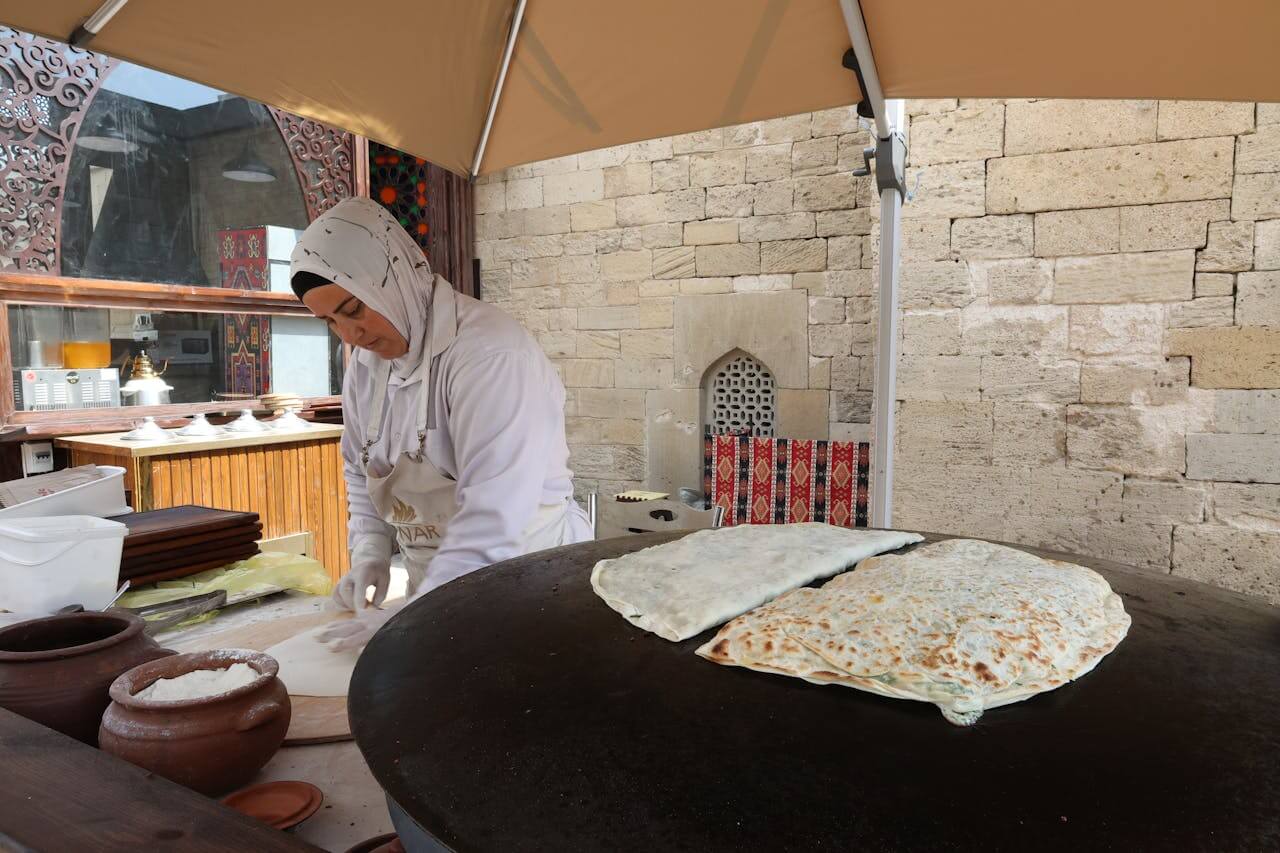
Gözleme (pronounced gerz-leh-meh) is a thin flatbread filled with ingredients such as spinach, cheese, vegetables, or meat, then cooked on a griddle and served with lemon wedges. It’s often compared to a savoury crepe or quesadilla.
Some of the most popular fillings include spinach and feta or beef mince with onion.
Gözleme is one of my favourite Turkish street foods (especially the spinach and feta) and it’s an absolute must-try in Istanbul. I grew up eating gözleme at markets in Australia, so I was really excited to finally try it in Turkey.
It’s sold by street vendors, at markets, and in casual restaurants. You can often watch the dough being rolled out by hand, filled, and cooked fresh to order. Seeing it prepared in front of you is part of the experience, and it’s something locals eat regularly as well.
3. Lahmacun
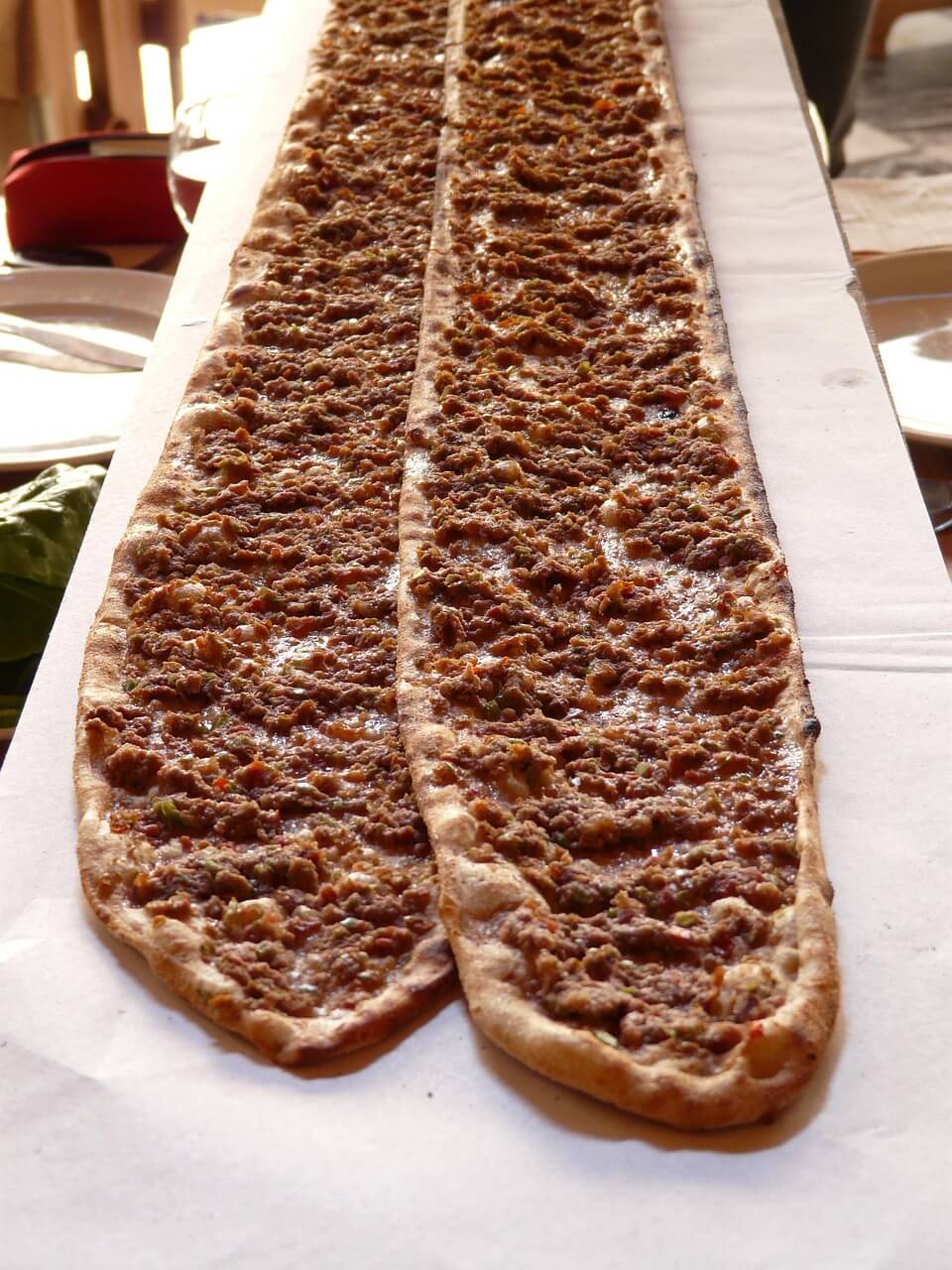
Lahmacun (pronounced lah-mah-joon) is often compared to pizza, but without the cheese.
It’s made by spreading a thin layer of minced meat mixture over flat dough and baking it in a hot wood-fired or stone oven until crisp. The topping is seasoned with herbs, spices, and vegetables like onion, tomato, and capsicum.
Lahmacun is usually folded or rolled up and eaten by hand, making it a popular street food in Turkey and neighbouring countries. It’s a great option if you want a quick bite or something easy to share, and you’ll find it everywhere from bakeries to casual eateries.
4. Pide
Pide is another one of my favourite Turkish street foods and something I really enjoyed eating in Turkey.
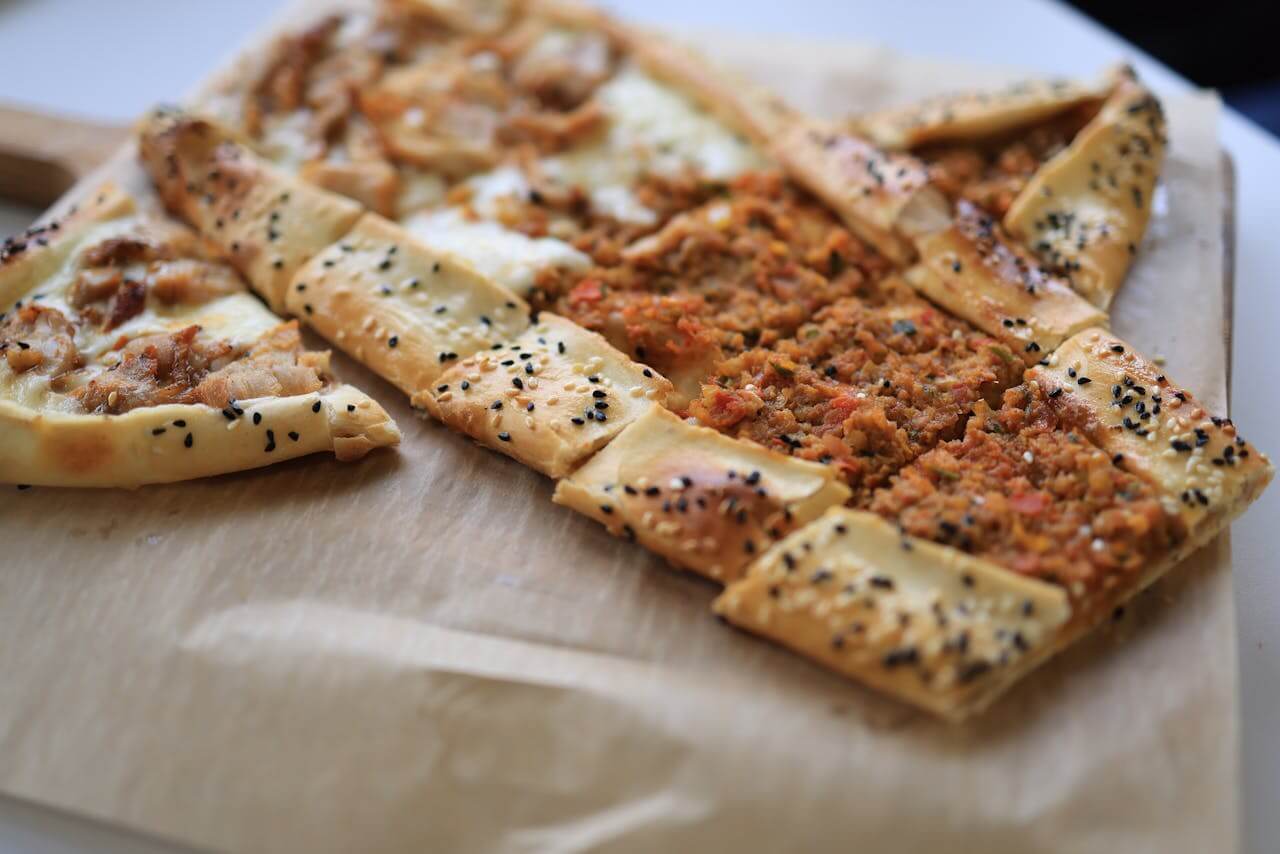
Pide (pronounced pih-deh) is also sometimes compared to pizza, but it’s quite different from lahmacun. It’s made with soft, fluffy dough topped with ingredients like minced meat, vegetables, and cheese. The edges are folded over to create its distinctive boat shape before being baked in a hot wood-fired oven.
It’s served sliced and eaten by hand, usually in restaurants or bakeries. Pide is more filling than lahmacun and makes a great lunch if you want something hearty without committing to a full sit-down meal.
5. Börek
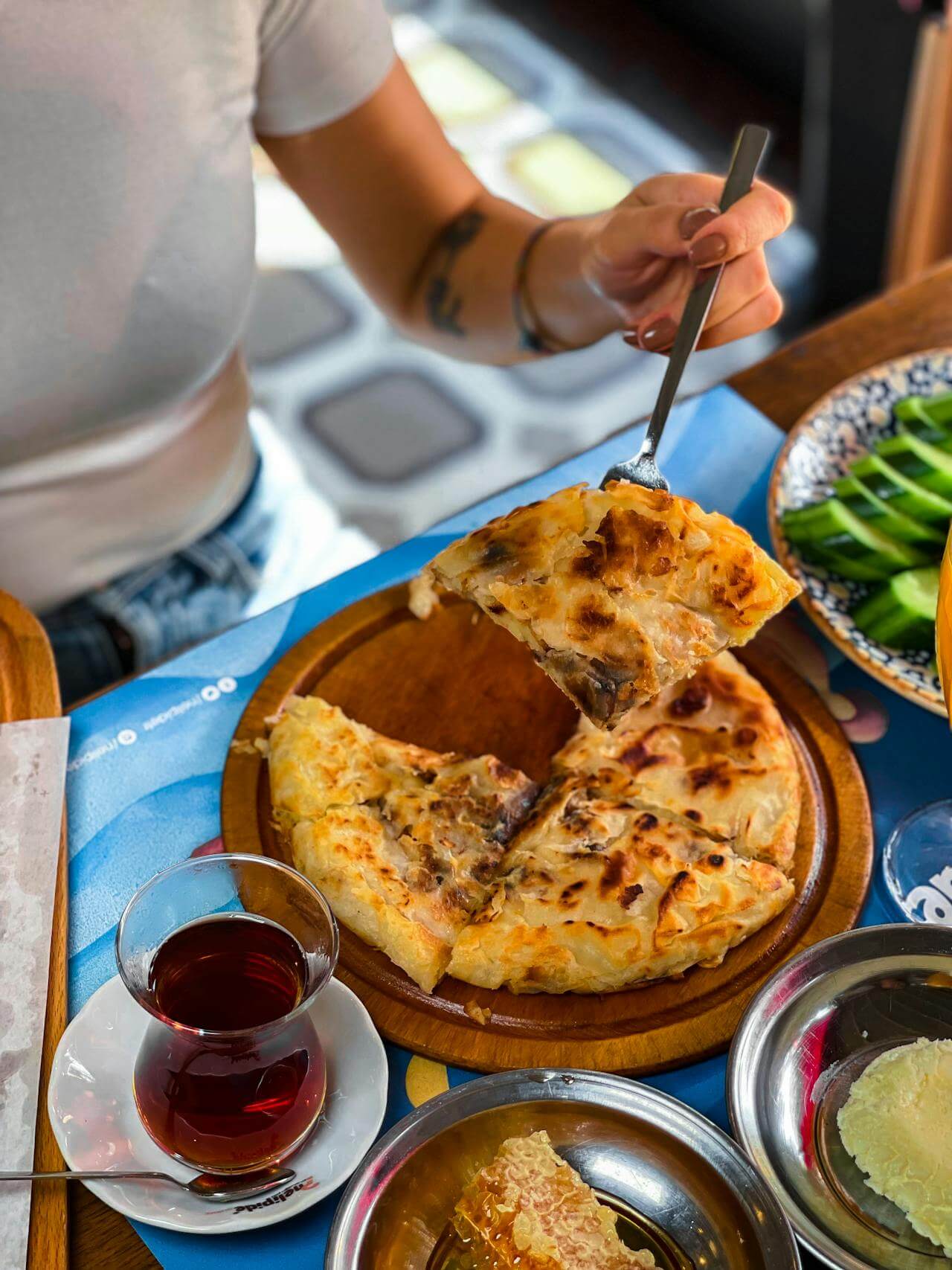
Börek is a savoury pastry made with layers of thin pastry and fillings such as cheese, spinach, or minced meat. It comes in many different shapes, with cheese börek being my personal favourite.
You’ll find börek sold by street vendors and in most bakeries, with many bakeries specialising in it. While it’s traditionally eaten for breakfast, I personally find it more satisfying as a lunch option since it can be quite heavy.
Börek is delicious when it’s fresh and hot but disappointing otherwise. I’d recommend buying it from a bakery or small restaurant rather than a random street cart, where you’re more likely to get a freshly baked batch.
6. Dürüm
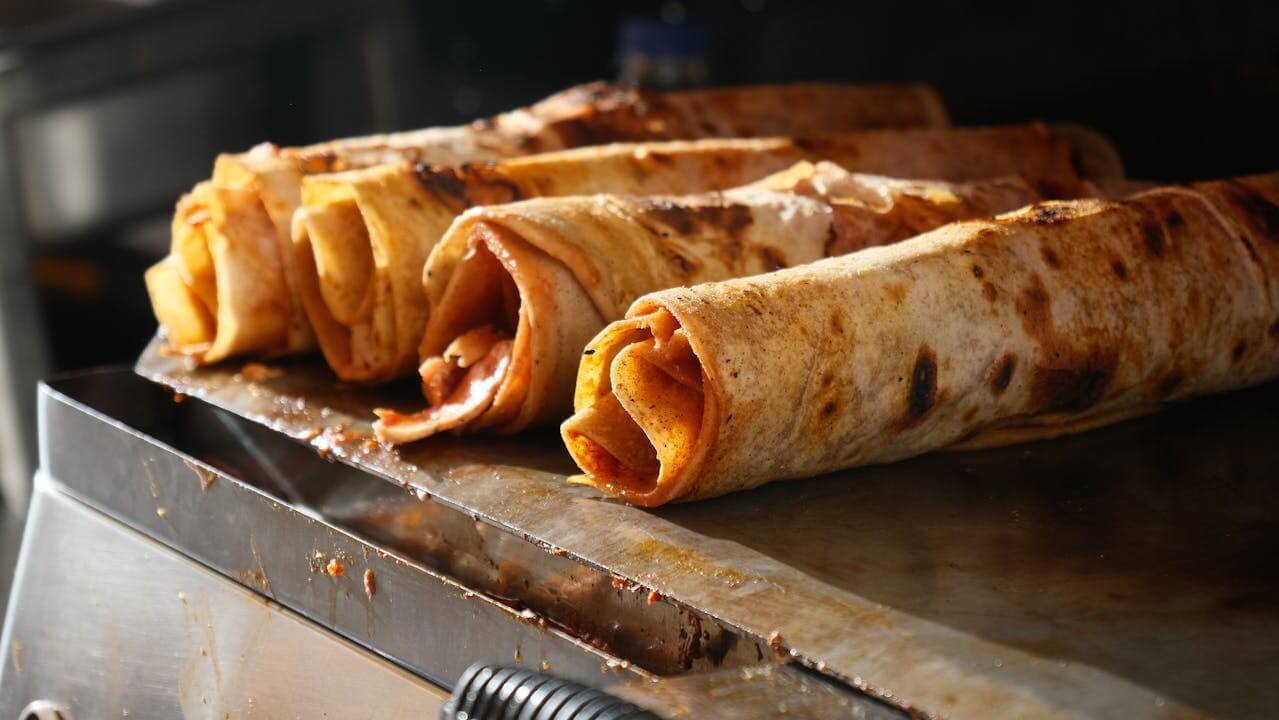
Dürüm (pronounced doo-room) simply means “wrap” or “roll” in Turkish.
It typically consists of flatbread such as lavash or yufka filled with kebab meat, salad, or sometimes fish. Dürüm is extremely common throughout Istanbul and Turkey and is popular with both locals and tourists.
It’s an ideal on-the-go lunch when you’re sightseeing and don’t want to stop for a full meal.
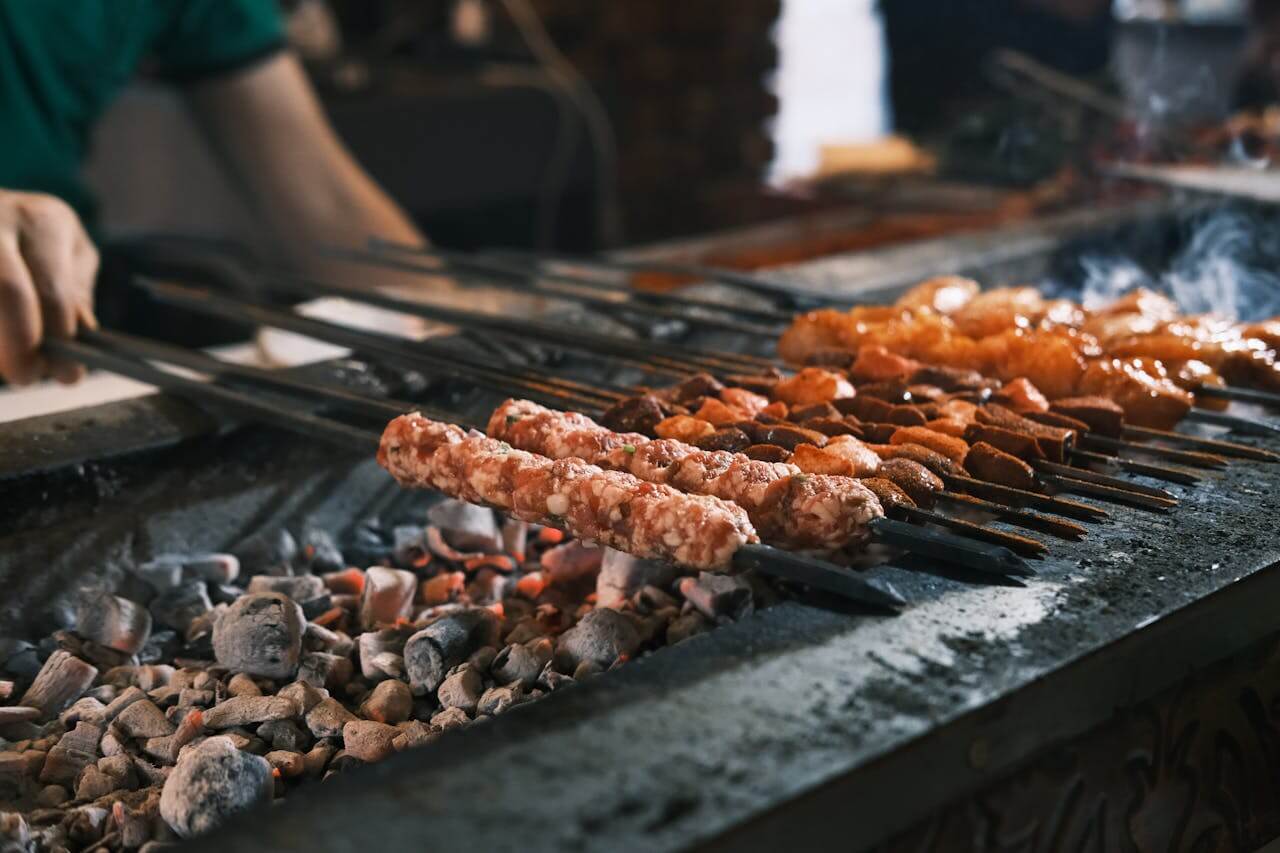
7. Kebab
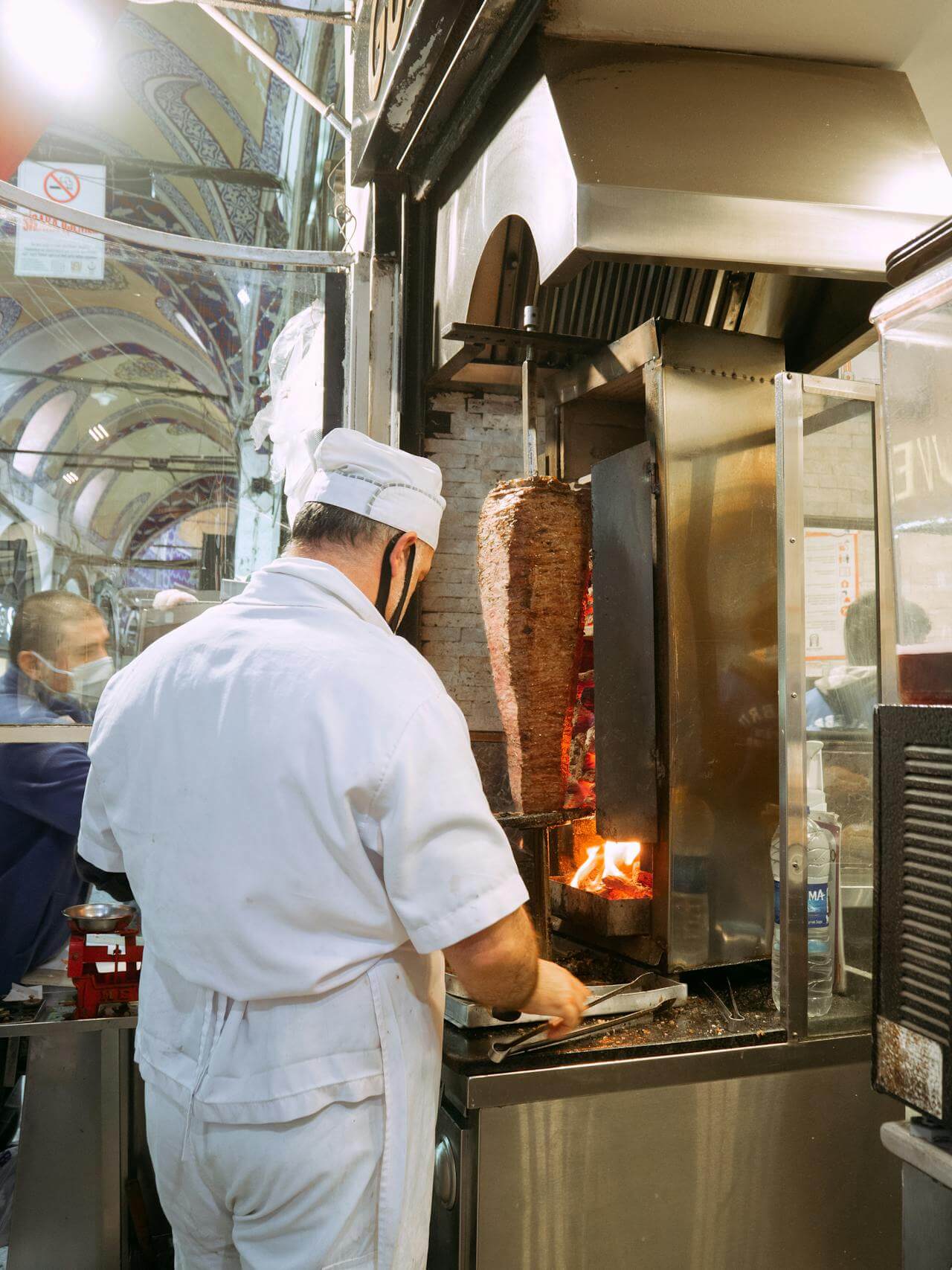
The word kebab simply means roasted or grilled meat, and there are many different types in Turkey. You’ll find some kind of kebab on most menus in Istanbul, with döner kebab and şiş kebab being the most common street food varieties.
One thing that really surprised me was how fresh and healthy kebabs felt in Istanbul. In many parts of the world, döner kebabs are greasy late-night food, but in Turkey they’re more commonly eaten for lunch and made with fresher ingredients.
Döner kebab consists of meat stacked on a vertical rotisserie and shaved off into bread or wraps. Şiş kebab refers to marinated cubes of meat and vegetables threaded onto skewers and grilled over an open flame.
8. Balik Ekmek
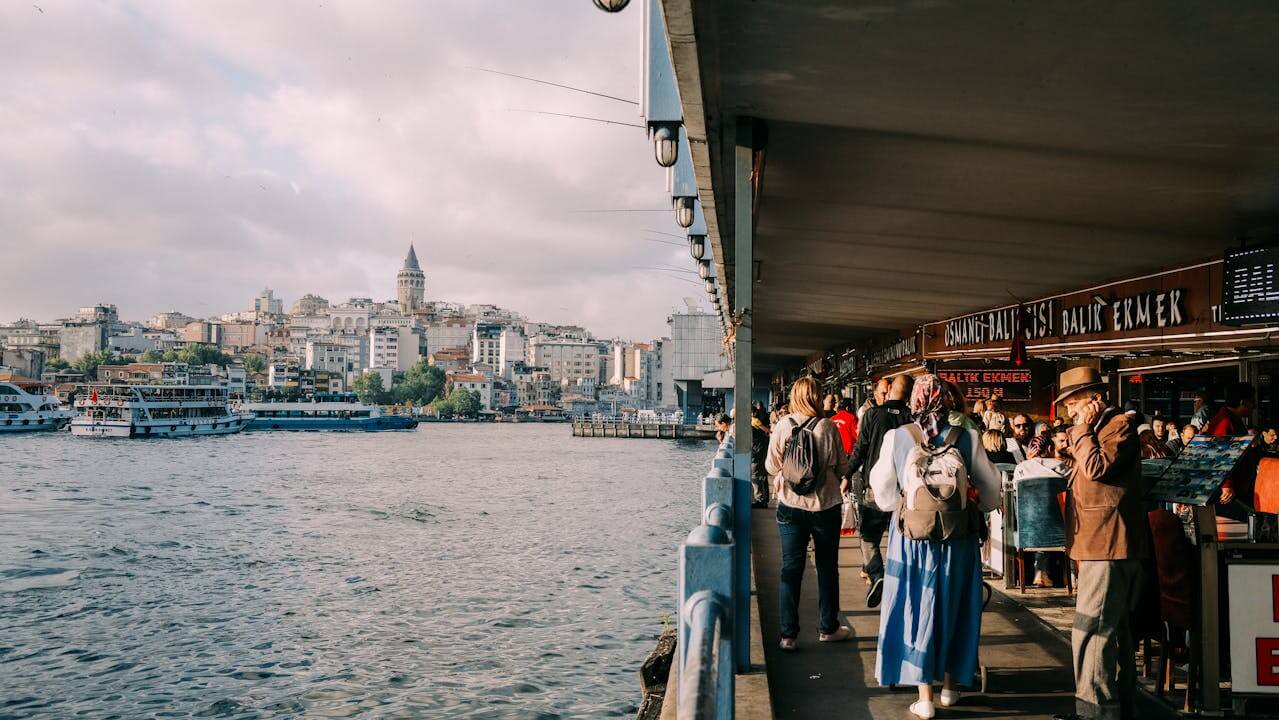
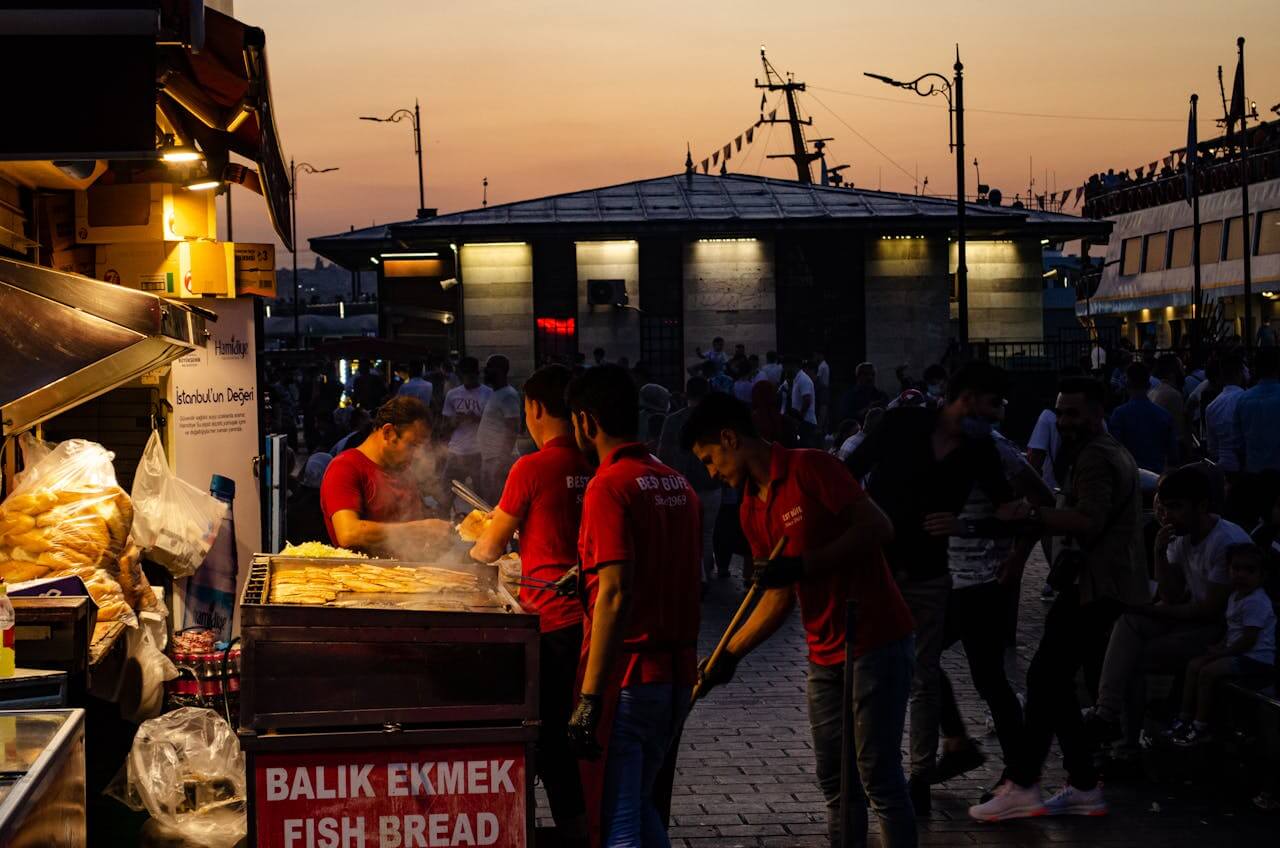
Balık ekmek is Istanbul’s famous fish sandwich, usually made with grilled mackerel. It’s especially popular in Eminönü, along the waterfront near Galata Bridge.
I had balık ekmek at one of the small restaurants on Galata Bridge. While the sunset views were incredible, the sandwiches themselves were a bit dry. I suspect balık ekmek is best when it’s cooked fresh and eaten immediately as true street food.
You’ll also find balık ekmek sold directly from boats in Eminönü. On the Karaköy side of the bridge, you can try balık dürüm (fish wraps), which I’ve heard are excellent.
9. Midye Dolma
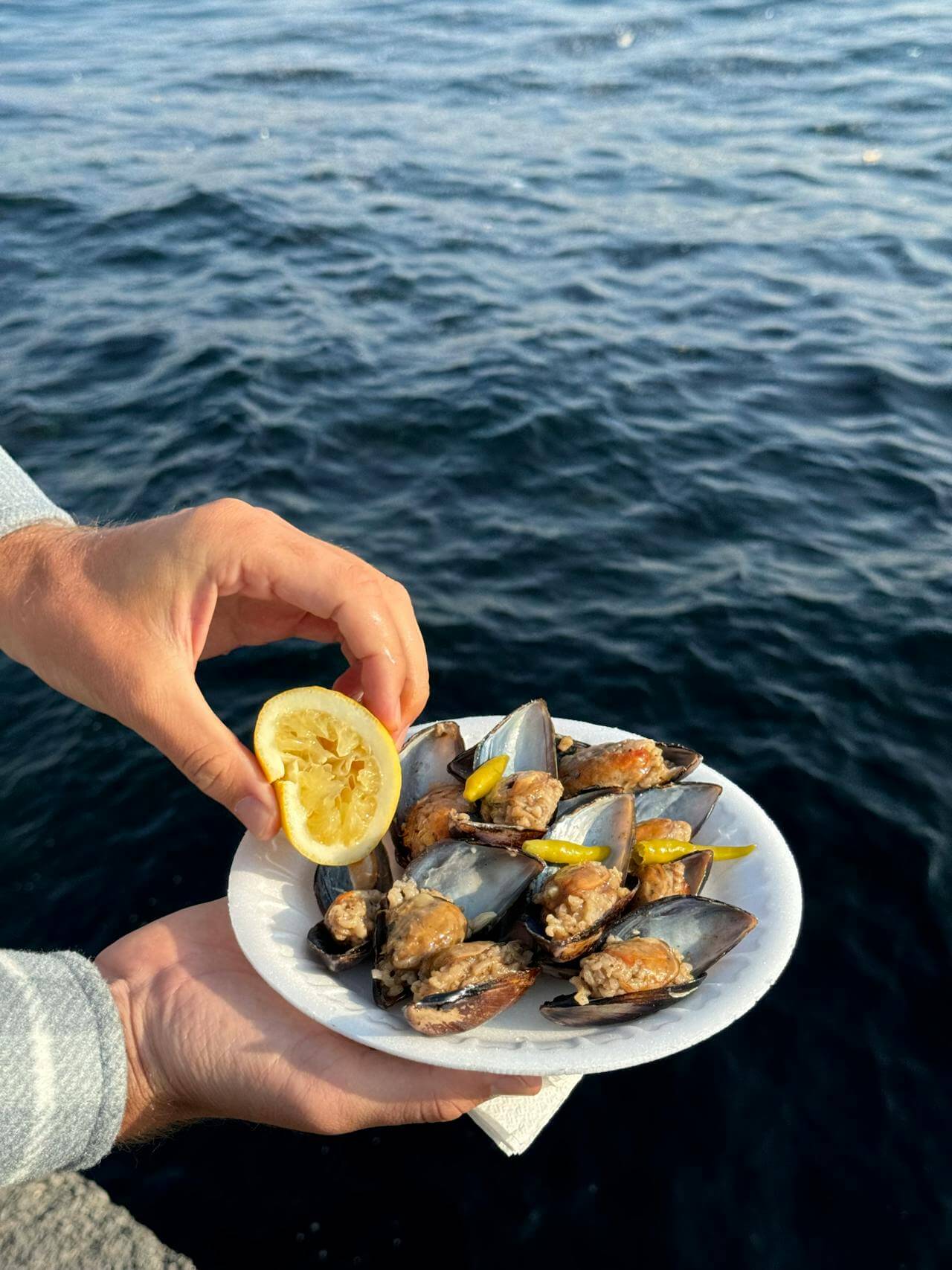
Midye dolma means “stuffed mussels” and refers to mussels filled with flavourful herbed rice and served cold with a squeeze of lemon juice.
This is a famous Istanbul street food sold by vendors, especially in coastal areas. It’s typically eaten on the street, and vendors often provide small buckets for the shells. You eat the mussel in one bite, using the other half of the shell as a spoon.
Midye dolma is most common in Istanbul, as well as coastal cities like Izmir and Bodrum. In Istanbul, it’s best enjoyed near the water in areas like Karaköy, Eminönü, or Kadıköy. A must-try for seafood lovers.
10. Köfte
Köfte means meatballs in Turkish, and there are many different versions across the country.
They’re usually made from minced beef or lamb, lightly seasoned, and grilled. Köfte is widely available and often served in bread as a sandwich or as a simple plate with salad.
It’s a great option if you’re not feeling adventurous but still want to try something local.
11. Çiğ Köfte
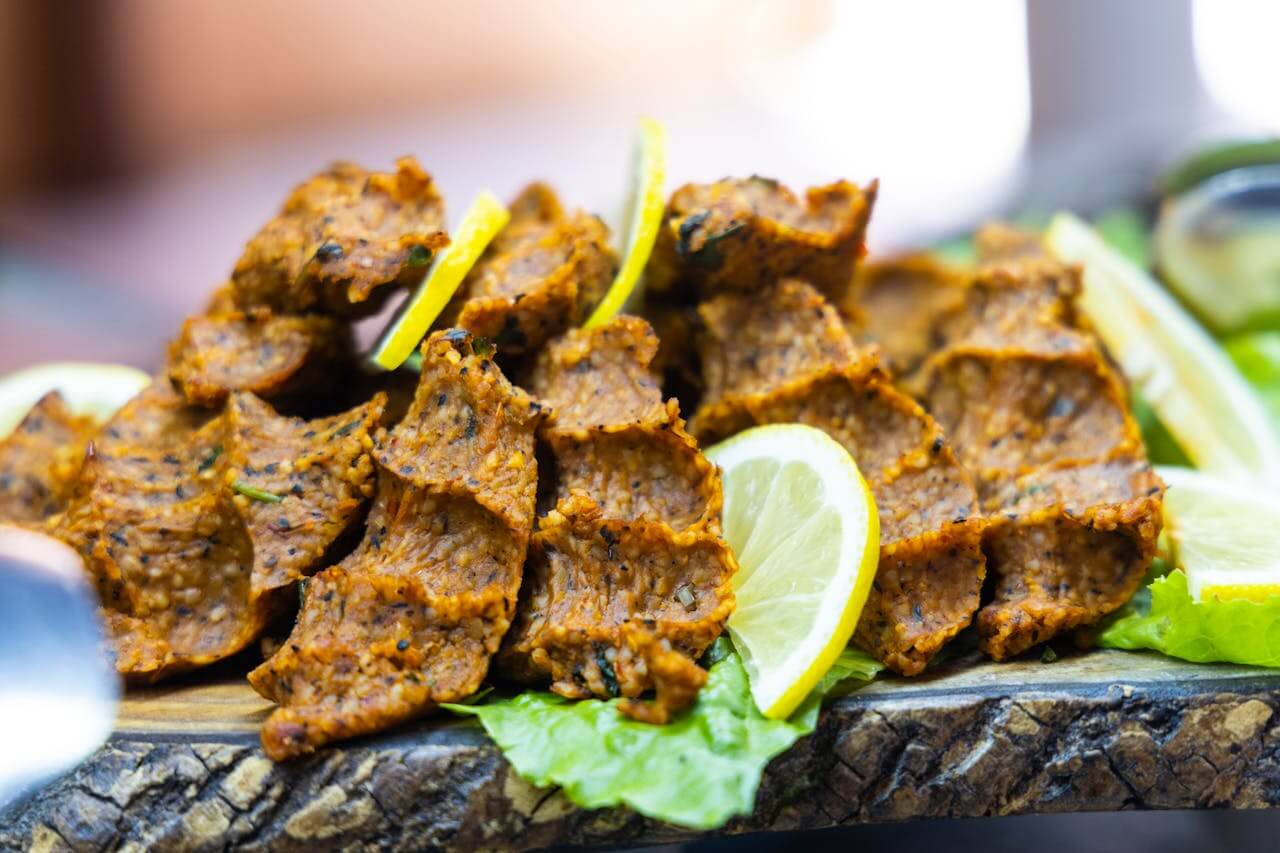
Çiğ köfte was the most interesting street food I came across in Istanbul. Pronounced chee-kuf-tah, the name literally means “raw meatballs.”
Traditionally, it was made with raw minced meat, but today it’s typically vegan due to health regulations. Modern çiğ köfte is a spicy paste made from bulgur, tomato paste, pepper paste, and spices, kneaded by hand and shaped before being served in lettuce leaves or flatbread.
Even without meat, it’s still raw dough that’s spicy, tangy, and unlike anything I’d tried before visiting Turkey.
12. Kokoreç
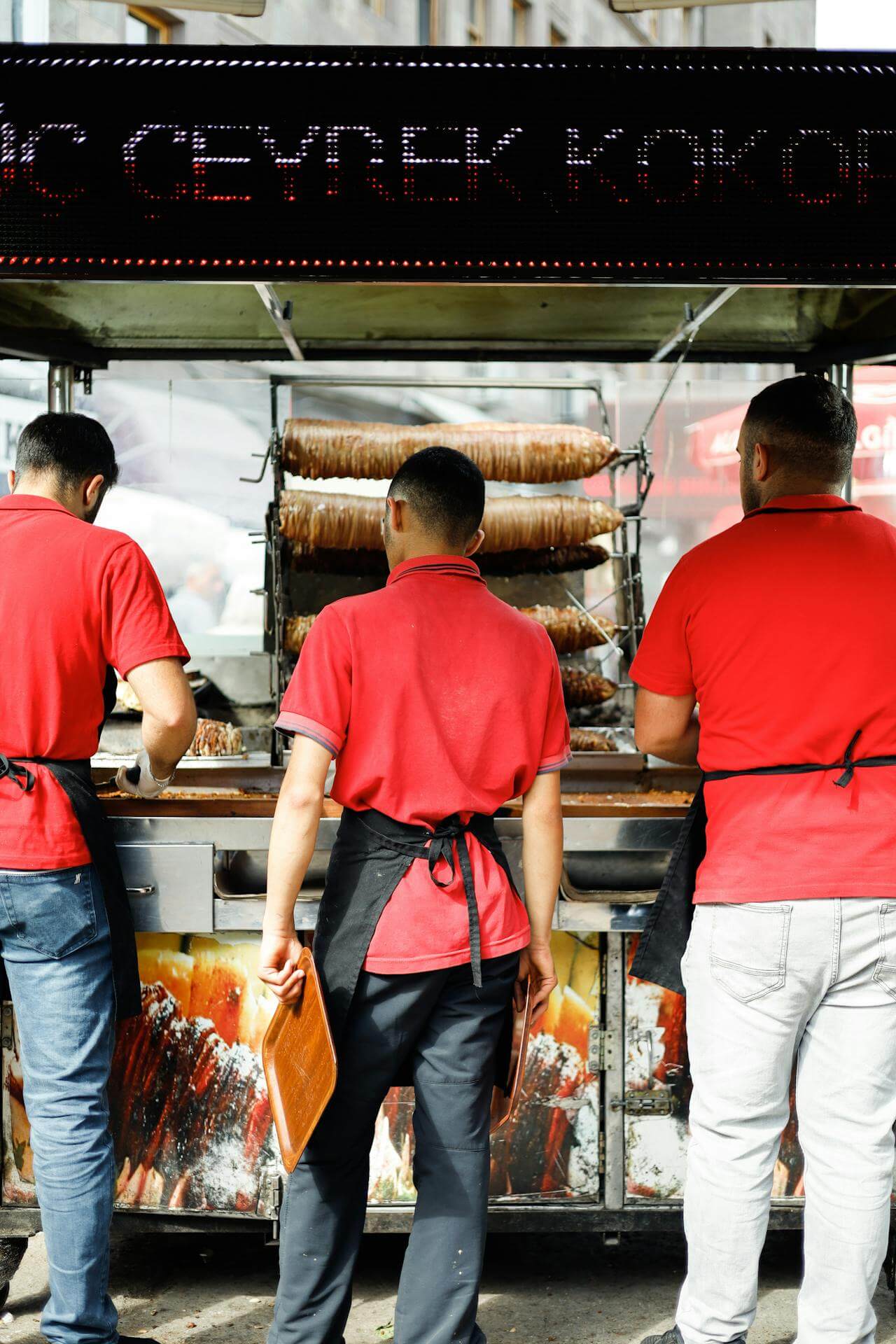
Kokoreç (pronounced koh-koh-rech) is another classic Istanbul street food.
It’s made from lamb offal stuffed inside lamb intestines, seasoned with spices, and roasted on a horizontal spit over charcoal. Once cooked, it’s chopped and served in bread.
While it doesn’t sound appealing to many tourists, kokoreç is extremely popular with locals, particularly late at night. I didn’t try it myself (there’s only so much you can eat) but maybe next time!
13. Islak Burger
Islak burgers, or “wet burgers,” are small hamburgers soaked in a garlicky tomato sauce and kept warm in glass cabinets. They’re soft, messy, and very much a late-night food.
They were invented in Taksim Square, where people often grab one or two on their way home from clubs.
Interestingly, while kebabs are late-night food in many countries, in Istanbul it’s the islak burger that fills that role.
14. Kumpir
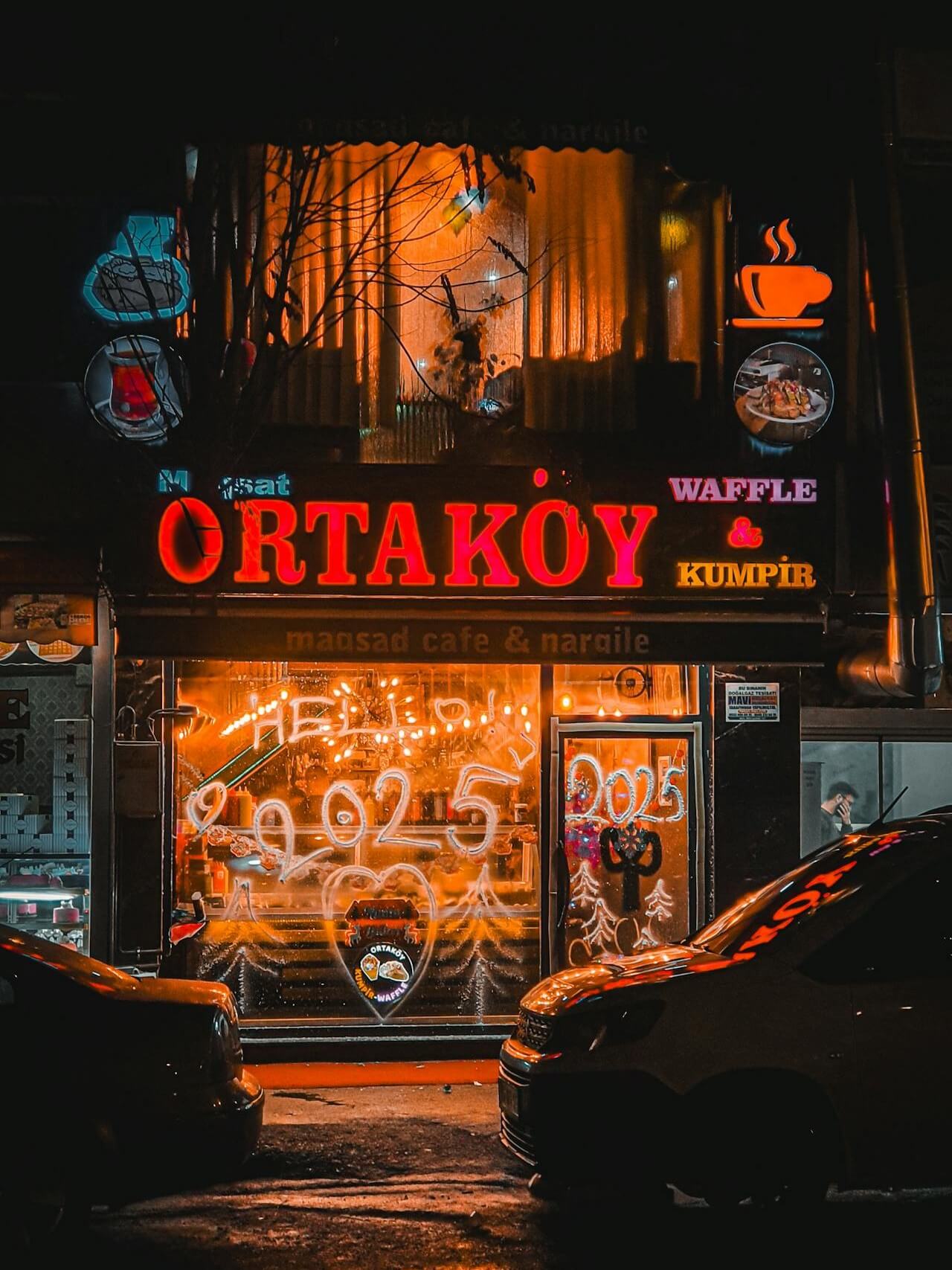
Kumpir is essentially a giant baked potato, but Istanbul turns it into a full street food experience.
The potato is baked until fluffy, then split open and mashed with butter and cheese before being piled high with toppings. It’s highly customisable, with options like corn, olives, pickles, sausage, salads, and sauces.
Kumpir is especially popular in Ortaköy, where rows of street stalls specialise in it. It’s very filling and often big enough to share.
15. Tavuk Pilav
Tavuk pilav is chicken and rice, a simple but satisfying dish.
It consists of fluffy rice cooked in rich chicken broth, often with chickpeas, and topped with tender shredded chicken. It’s a popular home-cooked meal and street food staple in Turkey, usually served with pickles and ayran.
While I didn’t try it as street food, I did eat similar versions at restaurants, and it’s easy to see why it’s so popular.
🍦 Best Street Food Desserts in Istanbul
16. Baklava
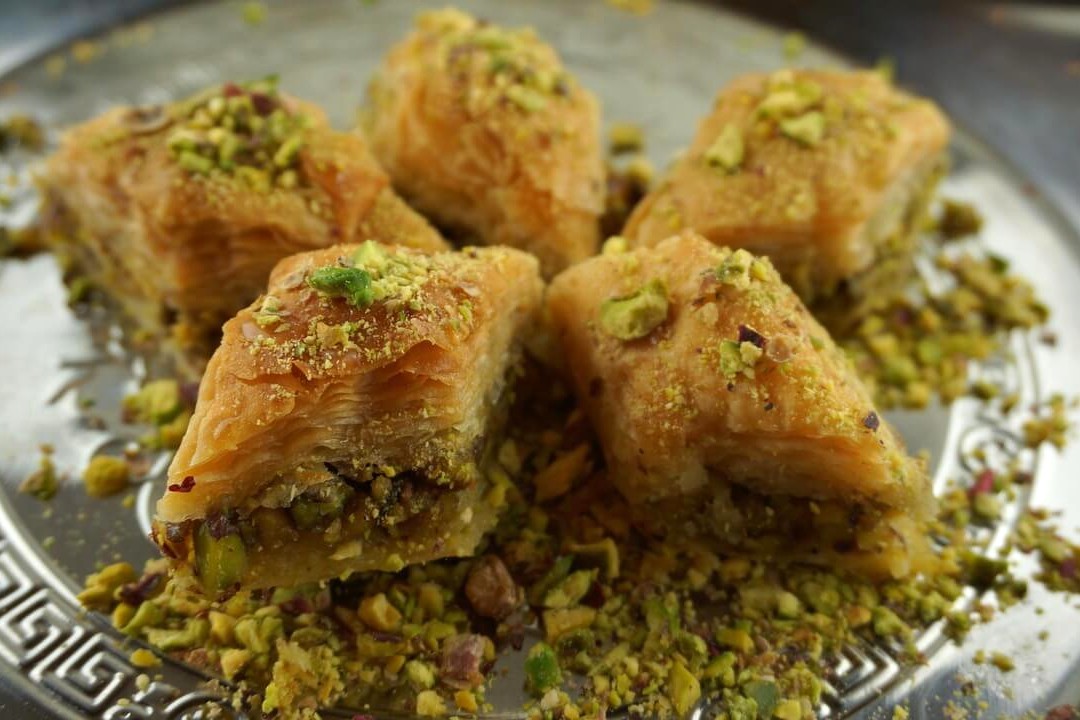
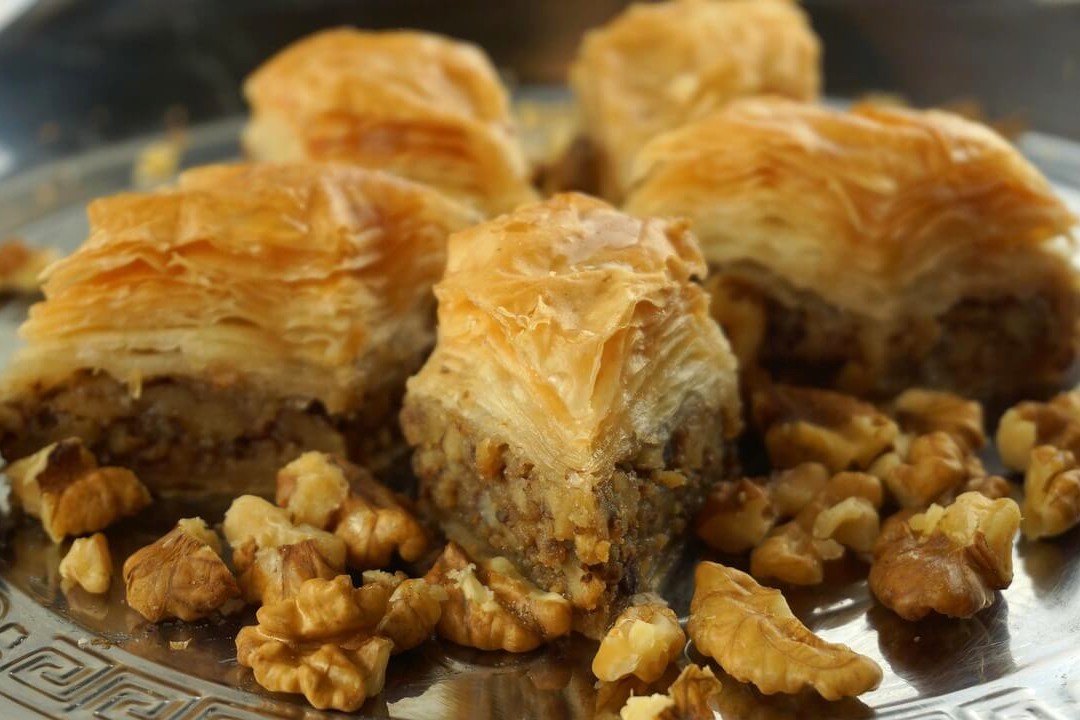
Baklava is one of Turkey’s most famous desserts. It’s made with layers of thin filo pastry, chopped nuts, and syrup or honey.
While it can be very sweet, it’s also incredibly tasty. I’d had baklava many times before visiting Turkey, but I noticed much more variety in Istanbul, including flavours like pistachio and chocolate, which help balance the sweetness.
Two well-known places worth visiting are Hafız Mustafa and Güllüoğlu, both famous for their traditional baklava and wide range of Turkish desserts.
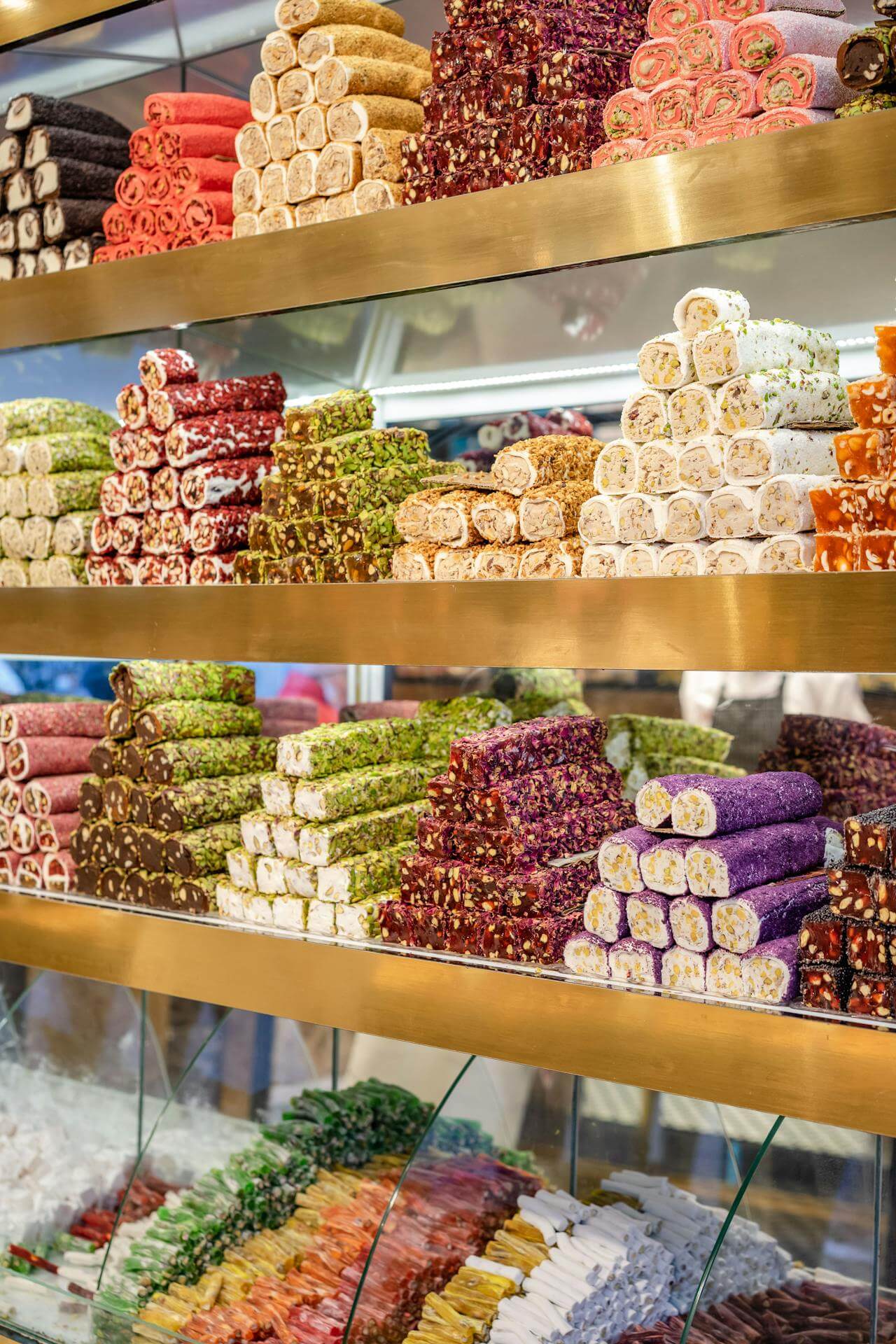
17. Lokum (Turkish Delight)
Before visiting Turkey, I never liked Turkish delight. I’d only tried the old-fashioned, overly chewy rose-flavoured versions.
In Istanbul, I quickly realised how wrong that assumption was. There are so many different types of lokum, with a wide range of flavours, fillings, and textures. Many are rolled rather than cubed and filled with nuts or coated in coconut.
While it’s still not my favourite dessert, I did find several types I genuinely liked. I bought some from the Spice Bazaar, including a sealed box to take home as a gift, which is convenient for flying.
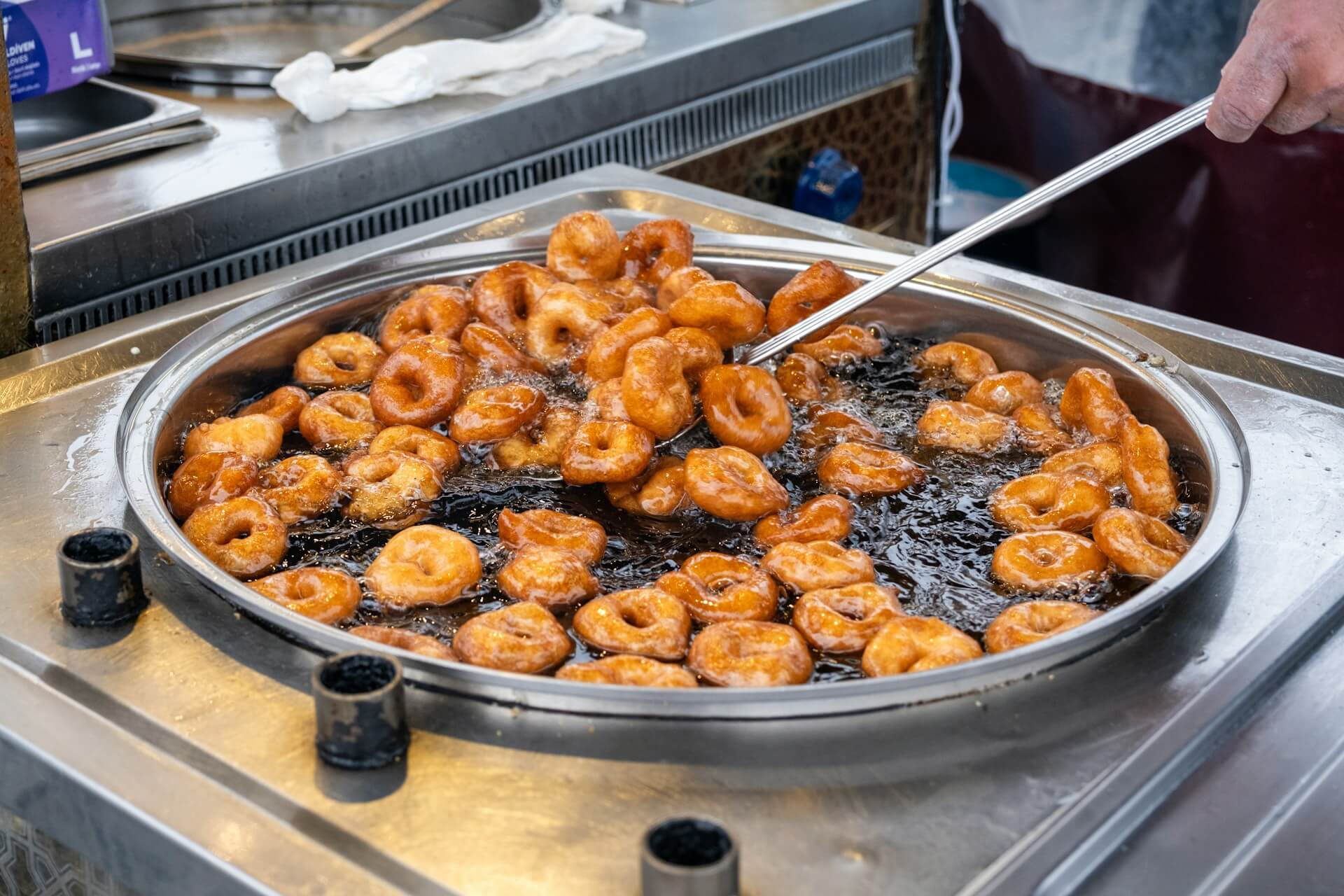
18. Lokma
Lokma are small, deep-fried dough balls soaked in syrup and served warm. They’re light, sweet, and very easy to eat.
You’ll sometimes see them sold from street carts, but they’re also often handed out for free at events or memorials. Lokma is best eaten fresh while still warm and crispy on the outside.
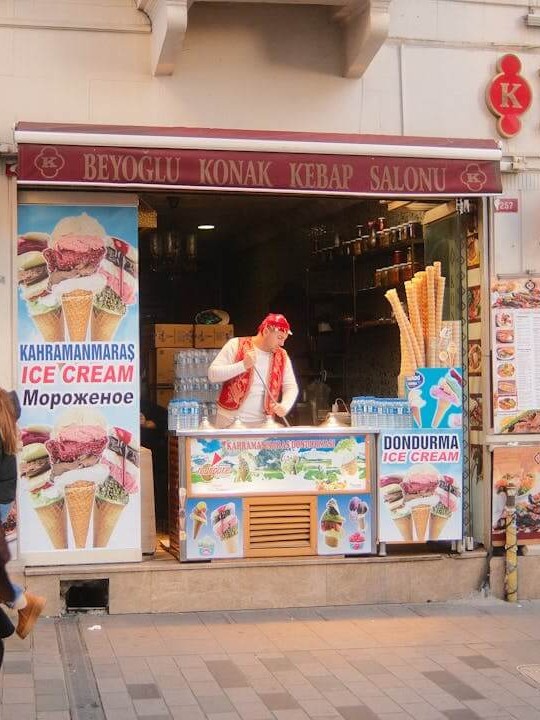
19. Dondurma
Dondurma is Turkish ice cream, known for its thick, stretchy texture. It’s often described as very different from regular ice cream, although personally, I didn’t find it that different from a good gelato.
That said, it’s tasty and very refreshing during Istanbul’s hot summer months. Some vendors put on playful performances when serving it, though I didn’t see any of the famous tricks, which may only happen in very touristy areas.
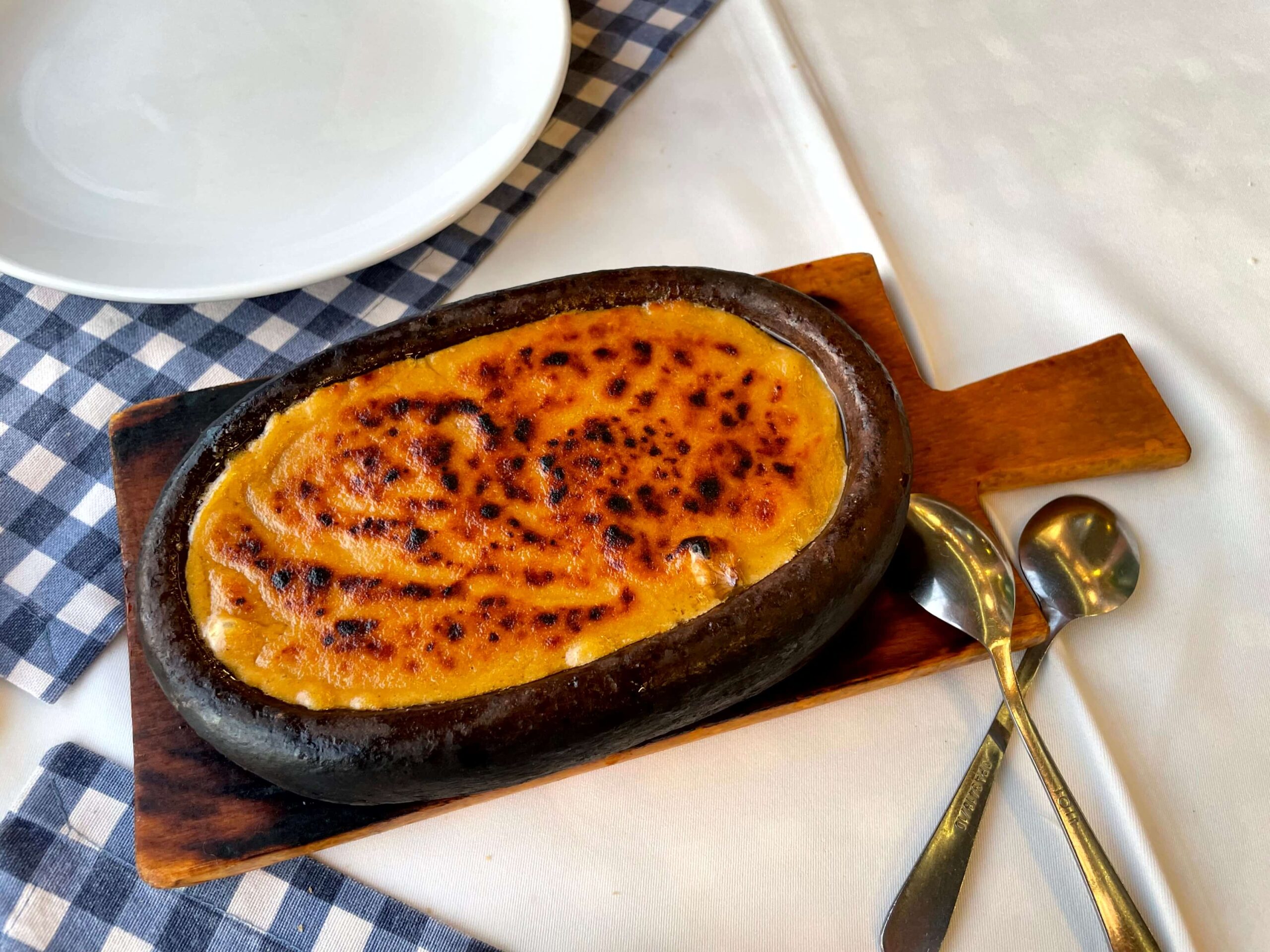
20. Künefe
Künefe is a warm dessert made with shredded pastry, soft cheese, and syrup, usually topped with crushed pistachios.
It’s quite different from most Western desserts and definitely something new to try. I had künefe at a restaurant, although it’s also sold by street vendors. It’s rich, very sweet, and quite heavy, so it’s best shared.
Where to Try Street Food in Istanbul
One of the best things about Istanbul Street food is that you don’t need to seek it out, it’s everywhere. That said, some areas are especially good for first-time visitors.
Eminönü is one of the city’s most famous street food spots, known for balık ekmek, simit vendors, and ferry-side snacks.
Kadıköy, on the Asian side, has a more local feel and a fantastic food scene, especially in the evenings.
Taksim & Istiklal Street are hotspots for late-night street food, including döner kebabs, dürüm wraps, and islak burgers.
Markets and ferry terminals are also excellent places to eat, as locals grab food there daily.
Street Food Tours
If you’re visiting Istanbul for the first time and feel overwhelmed by choice, joining a street food tour can be a great option.
A good tour allows you to try a wide variety of dishes, learn cultural context, avoid tourist traps, and discover foods you might not order on your own.
🍢 Click Here to Book Your Istanbul Street Food Tour!
Frequently Asked Questions
Is street food in Istanbul safe to eat?
Yes, street food in Istanbul is generally very safe, especially if you stick to busy stalls with high turnover.
How much does street food cost in Istanbul?
Most street food is very affordable. Snacks like simit or börek cost very little, while meals like dürüm, kebabs, or kumpir are still budget friendly.
Is street food in Istanbul halal?
Yes, the vast majority of street food in Istanbul is halal.
Are there vegetarian-friendly street foods in Istanbul?
Absolutely. Vegetarian options include gözleme, simit, börek, çiğ köfte, kumpir, and many desserts.
Do I need to speak Turkish to order street food?
No. Pointing is common and perfectly acceptable. Learning a simple teşekkür ederim (thank you) is always appreciated.
Final Thoughts
Trying street food in Istanbul was one of my favourite parts of visiting the city. From foods I already loved like gözleme and pide to completely new dishes like çiğ köfte and midye dolma, it’s an easy and affordable way to experience Turkish culture beyond restaurants.
For first-time visitors, street food is approachable, filling, and everywhere. Whether you’re grabbing a quick simit, sitting down for pide, or ending the night with something sweet, there’s always something worth trying.
If you’re short on time or unsure where to start, a street food tour can be a great introduction. Otherwise, wandering, following the locals, and eating what looks fresh is all part of the fun.