Manuel Antonio National Park Travel Guide
This post contains affiliate links. If you click and make a purchase, I may earn a small commission at no extra cost to you.
If you’re looking for a complete travel guide for visiting Manuel Antonio National Park, you’re in the right place.
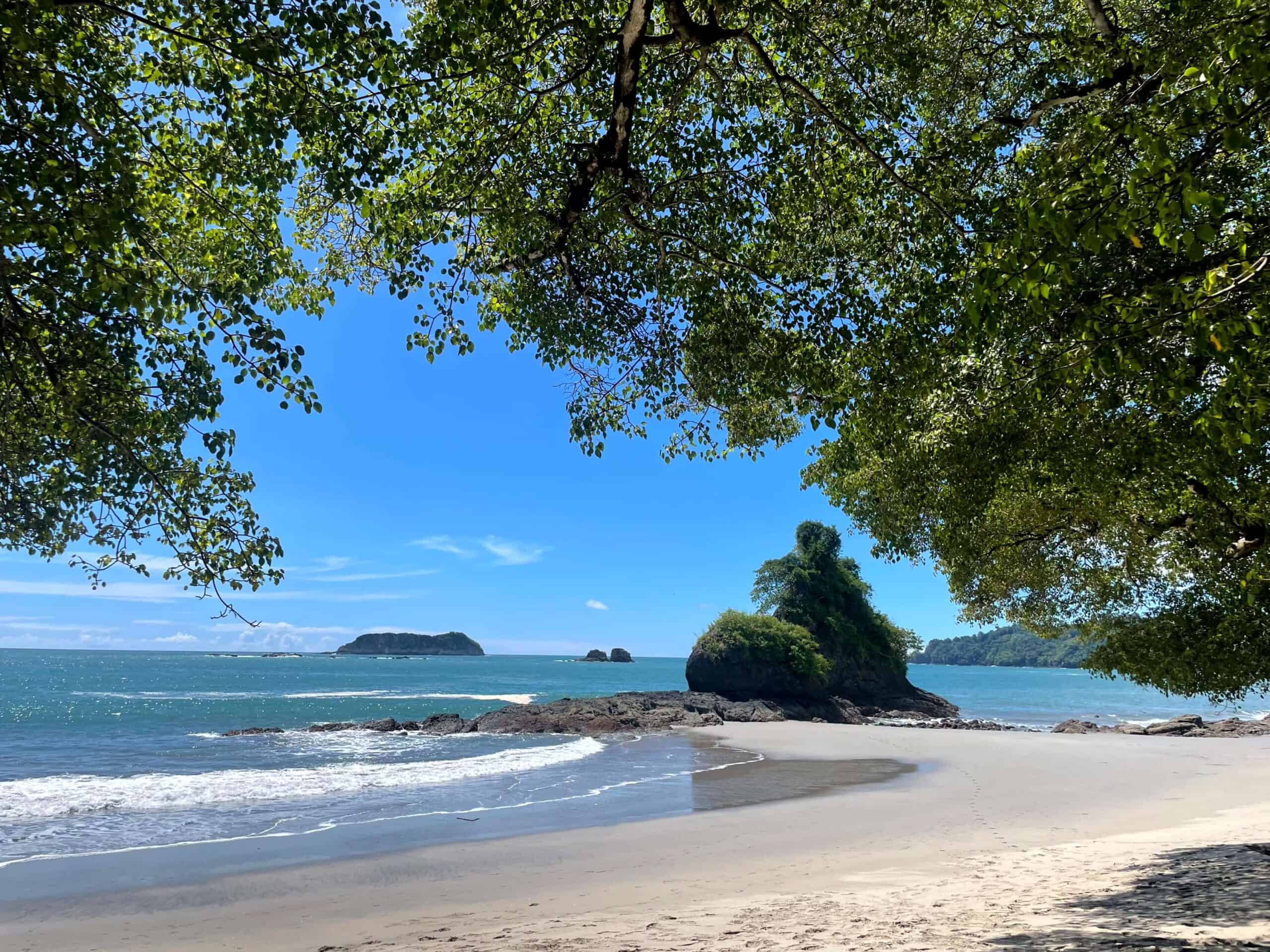
Manuel Antonio is one of the most beautiful and biodiverse places in Costa Rica.
Despite being the country’s smallest national park, it offers a remarkable combination of lush rainforest, stunning beaches, and incredible wildlife. It’s one of the best places to see Costa Rica’s iconic animals in the wild, including sloths, monkeys, iguanas, and toucans.
The national park is easily accessible by car or bus, and there are many guided tour options available if you prefer a more convenient experience. You’ll also find hotels and restaurants nearby if you want to base yourself in the area.
In this guide, I’ll cover everything you need to know before visiting Manuel Antonio National Park.
Manuel Antonio Mini Guide
Short on time? Here’s a quick guide to help you plan the perfect trip to Manuel Antonio!
🛏️ Where to Stay:
– Arenas del Mar (luxury)
– Hotel Costa Verde (mid-range)
– Mango Moon Villa (mid-range)
– Mi Zaru Sea View Hotel (budget)
☀️ When to Visit:
– Dec-Apr: Peak season with best weather
– May-Nov: Rainy season with less crowds
🦥 Top Tours:
– Guided Tour of Manuel Antonio
– Guided Tour with Transport from San José
– Guided Tour with Transport from Jaco
🧳 Travel Essentials:
– eSIM for Costa Rica
– eSIM for Latin America
– Affordable travel insurance
How to Get to Manuel Antonio National Park
Manuel Antonio National Park is located on Costa Rica’s Pacific coast, near the town of Quepos. It’s accessible by plane, car, bus, or guided tour, depending on your travel style and budget.
✈️ 1. Plane
You can fly from San José to Quepos Airport with a local airline such as Sansa. The flight takes around 30 minutes, and from the airport it’s about a 20-minute drive or taxi ride to the national park.
🚗 2. Car
The drive from San José to Quepos takes about 3 hours and from there, it’s about a 15-minute drive to the park entrance.
The roads are paved and generally in good condition, but the national park doesn’t have an official carpark. Private carparks nearby charge around $5-10 USD per day.
🚌 3. Bus
Public buses are a convenient and budget-friendly way to reach Manuel Antonio. You can travel from San José or Jaco to Quepos and then transfer to the local bus that runs to the national park.
- From downtown San José, the bus to Quepos takes about 3 hours and from the international airport, it takes about 4 hours.
- From Jaco, the journey to Quepos takes around 1.5 hours.
- Once in Quepos, a local bus runs roughly every 30 minutes during the day and takes about 30 minutes to reach the park, making several stops near popular hotels along the way.
➡️ 4. Guided Tour
If you prefer a stress-free experience, booking a guided tour is a great option. These tours handle your entrance tickets and logistics which is ideal for first-time visitors or those short on time.
There are options for private or groups tours and many also include round-trip transportation from San José or Jaco if you’d prefer to visit as a day trip.
🦥 Click Here to Book Your Guided Tour of Manuel Antonio!
When to Visit Manuel Antonio National Park
Dry Season (Dec-Apr)
- The most popular time to visit Manuel Antonio National Park, with sunny skies, warm temperatures, and very little rain.
- Perfect for relaxing on the beach, swimming, snorkelling, and spotting wildlife.
- Peak tourist season, so you can expect larger crowds and higher prices.
Wet Season (May-Nov)
- Rain is common, especially in the afternoons but this means lush, green landscapes.
- Wildlife is still very active, and this is the best time for whale watching.
- Fewer tourists and prices are much lower.
- We visited in October and were pleasantly surprised with sunny weather all day.
💡Tip: For the best experience, aim to enter the park when it opens at 7:00 AM as wildlife is most active during the cooler morning hours.
Important Information
Opening Hours
- Manuel Antonio National Park is open Wednesday to Monday (closed Tuesdays).
- Opening hours are from 7:00 AM to 4:00 PM.
Purchasing Tickets
- All tickets must be purchased online in advance via the SINAC website. You cannot buy tickets at the entrance.
- Tickets for foreign visitors cost around $18 USD per adult. Be sure to book ahead, especially in high season, as daily visitor numbers are limited and tickets sell out quickly.
Park Facilities
- There is a small café located within the national park.
- There are also several clean bathrooms along the main trail and close to the beach.
Wildlife Watching in Manuel Antonio
One of the highlights of visiting Manuel Antonio is the chance to see Costa Rica’s diverse wildlife in their natural habitat.
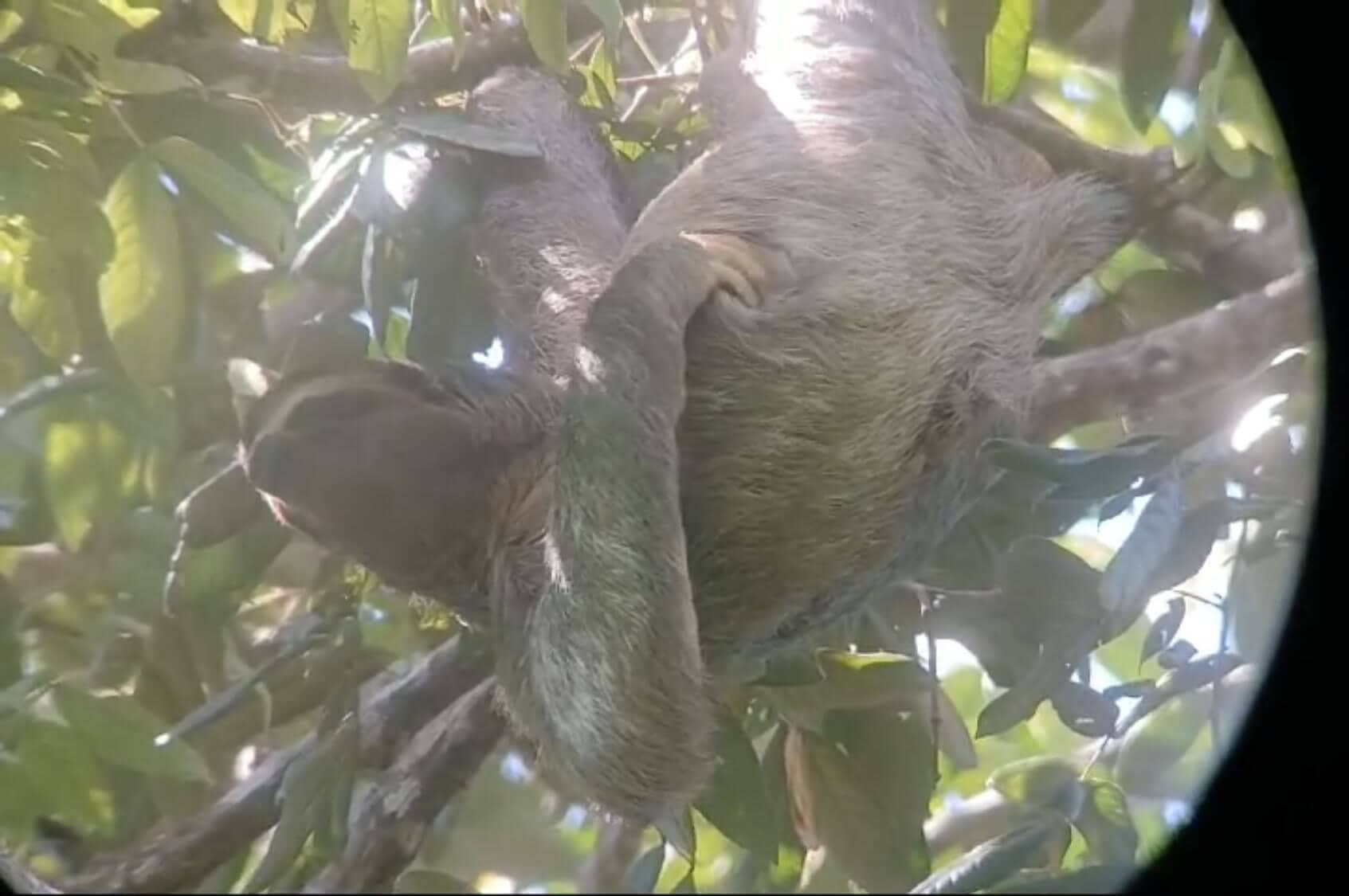
Sloths: Both two-toed and three-toed sloths can be spotted slowly navigating the treetops.
Monkeys: Three species of monkeys live in the park.
- Howler monkeys tend to stay high in the trees and can be heard before they’re seen thanks to their deep, roaring calls.
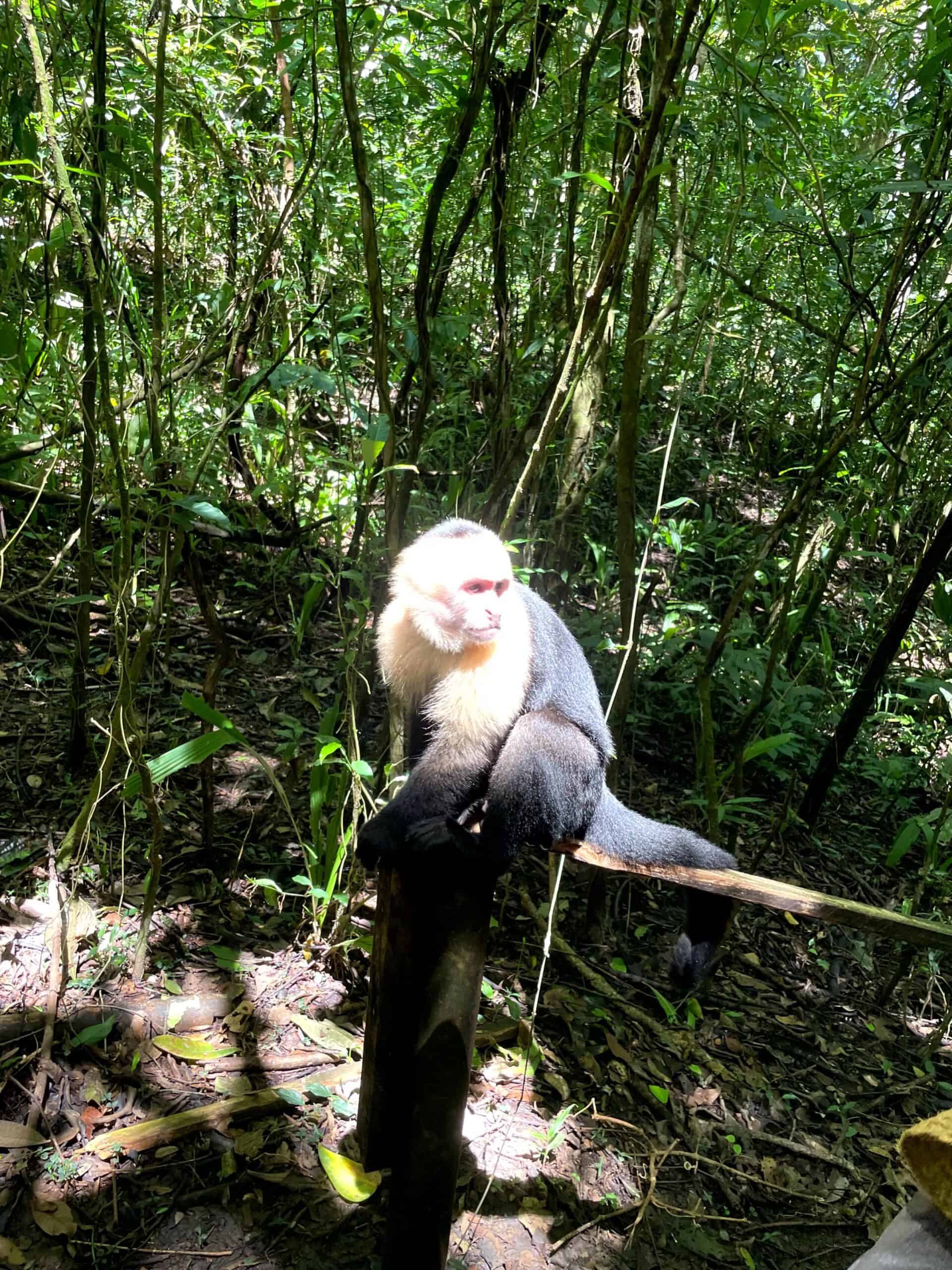
- Capuchin monkeys are bold and curious, often coming close to visitors and sometimes attempting to snatch unattended items.
- Squirrel monkeys are smaller and more elusive but equally fascinating.
Agoutis: These rodents are native to Costa Rica and are known for their unique abilities, like cracking open Brazil nuts which plays an important role in seed dispersal.
White-tailed deer: A surprise for many visitors, these shy creatures sometimes wander close to the trails.
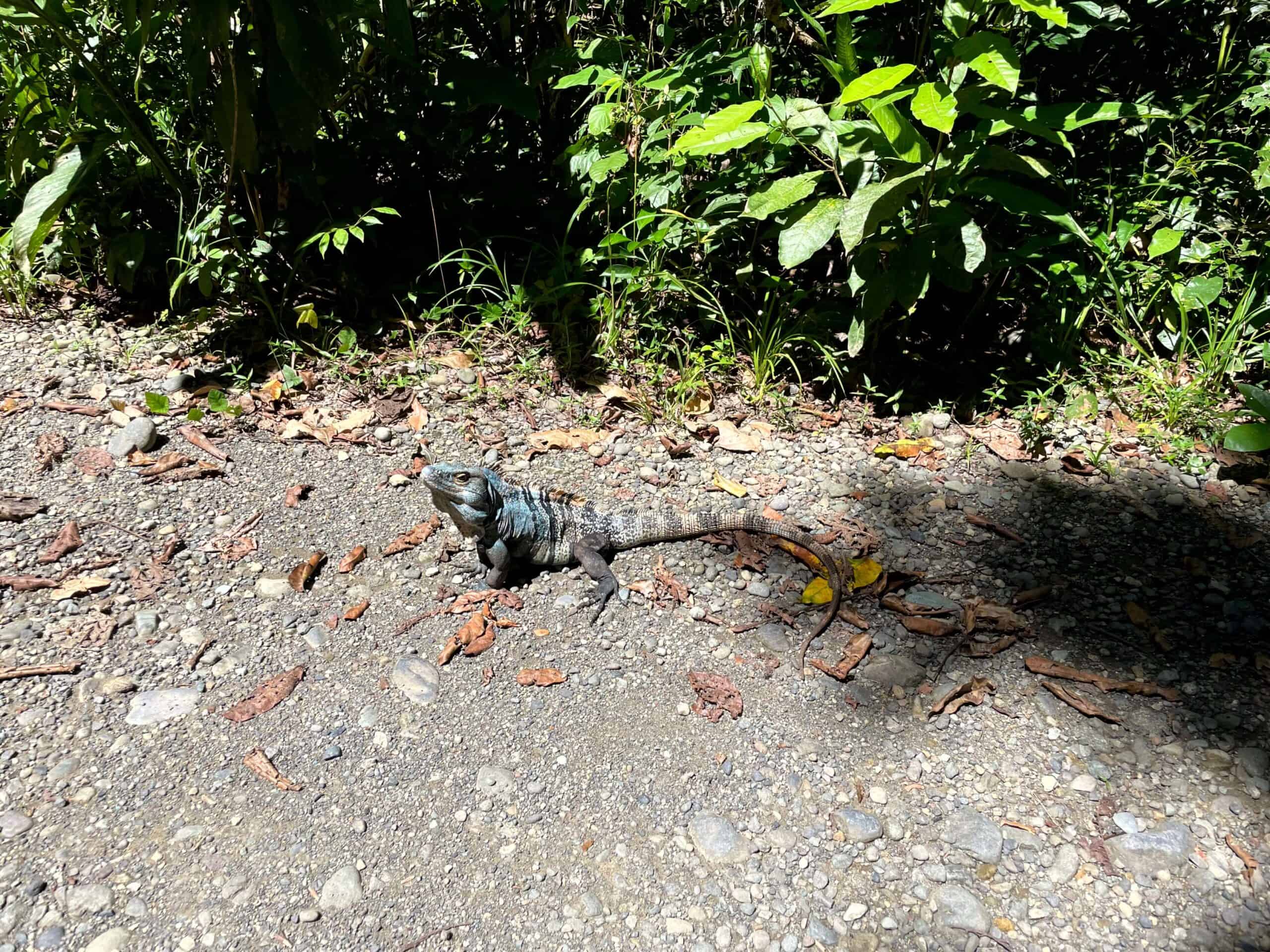
Iguanas: Both green iguanas and black spiny-tailed iguanas can be found in Manuel Antonio. They’re very easy to spot as they often walk across the main trails.
Frogs: Various species of frogs such as the poison dart frog and red-eyed tree frog can be seen if you look closely.
Green Basilisks: Also known as Jesus Christ Lizards, these reptiles are famous for being able to run on water.
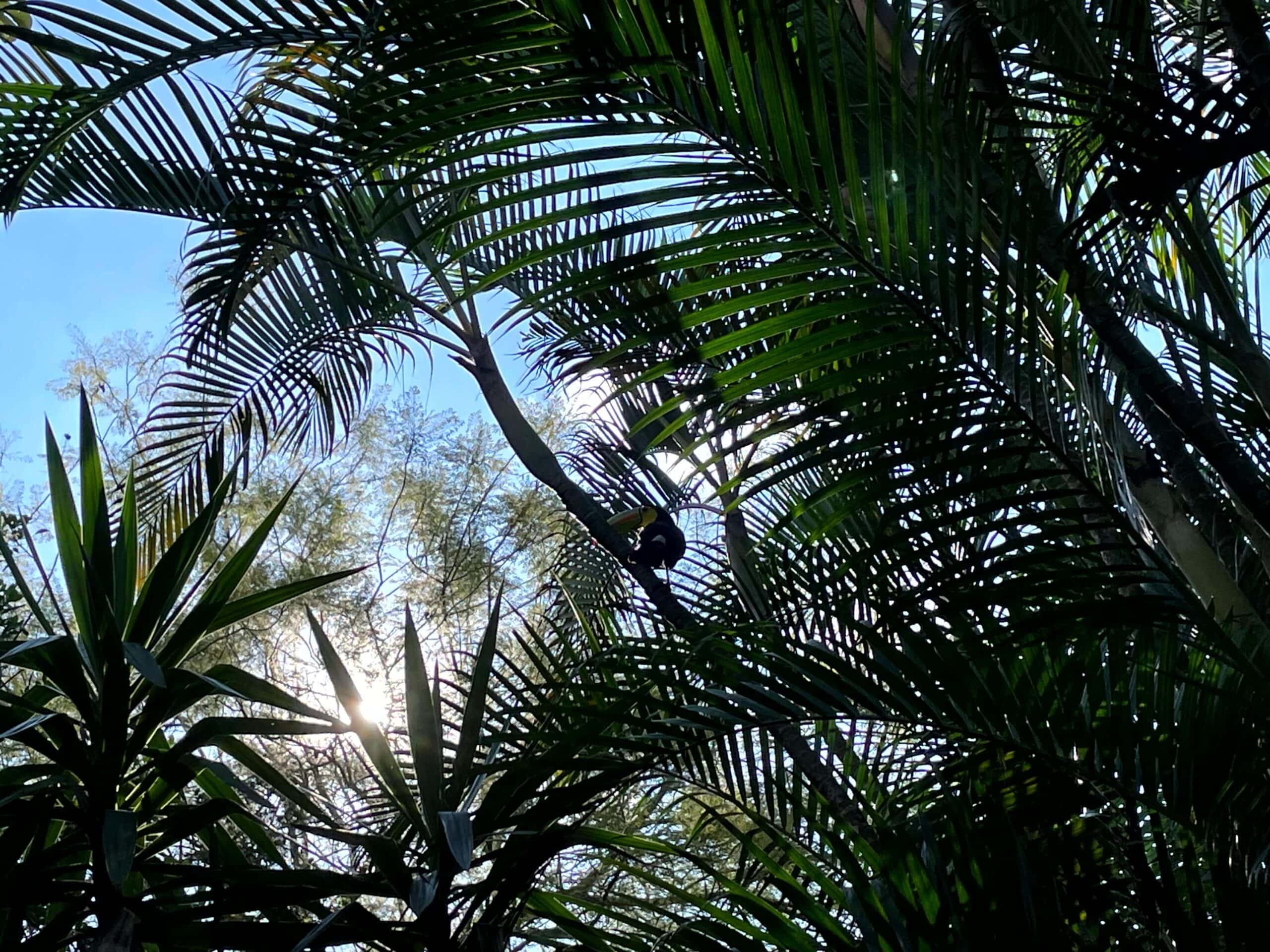
Birds: A variety of birds including toucans, hummingbirds, scarlet macaws, and motmots can be found in Manuel Antonio.
Whales and Dolphins: The surrounding waters of Manuel Antonio are a popular spot for whale watching, with many tours offering a chance to humpback whales and dolphins.
Dolphins can be seen throughout the year while you typically need to visit from July to October to see whales.
🐳 Click Here to Book Your Whale and Dolphin Watching Tour!
Manuel Antonio Hiking Trails
Manuel Antonio National Park has a well-maintained network of trails that are generally easy to moderate.
Main Trail (1.1km / 0.7miles): This trail takes you from the entrance of the national park to the café which is where the beach trails begin. It’s wide and flat so it’s suitable for all ages and you can spot plenty of animals from here.
Mangrove Trail (1.0km / 0.6 miles): This trail also begins at the main entrance and runs parallel to the main trail before turning off towards Espadilla Sur Beach. It’s an elevated walkway over the mangroves and an easy walk since it’s made of flat wooden boards.
Sloth Trail (0.6km / 0.4 miles): This trail joins on from the mangrove trail and runs parallel to the main trail ending at the café. It’s an easy trail but much quieter than the main trail so you’re more likely to see sloths.
Manuel Antonio Beach Trail (0.5 km / 0.3 miles): This trail runs from the café down to Manuel Antonio Beach and then along the beach before connecting with the Cathedral Point and Espadilla Sur Beach Trails. The trail is easy and not too steep.
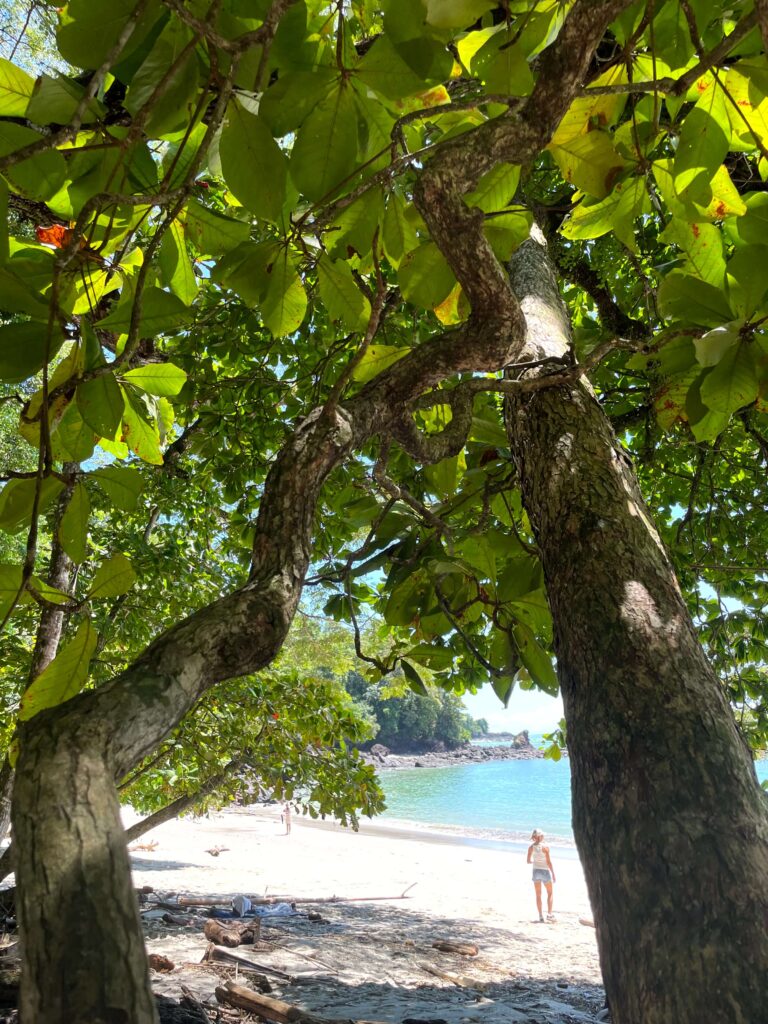
Espadilla Sur Beach Trail (0.8km / 0.5 miles): This trail runs parallel to Espadilla Sur Beach and connects the Manuel Antonio Beach trail to the mangrove trail with plenty of access points to the beach.
Cathedral Point Trail (1.2 km / 0.8 miles): This is a loop trail beginning at the junction of the Manuel Antonio and Espadilla Sur Beach trails. It’s a moderate hike with lots of stairs and beautiful views from three lookout points along the way.
Mirador Trail (1.0km / 0.6 miles): This trail begins at the end of the main trail and take you up to a lookout with a stunning view of Punta Serrucho. It’s the most difficult trail in the park with steep wooden staircases.
Gemelas Beach Trail (0.3km / 0.2 miles): This is an easy trail that can be accessed from the mirador trail and takes you down to Gemelas Beach which is the most secluded beach in the park being off the main trails.
Los Congos Trail (0.3km / 0.2 miles): This is a short but moderately difficult trail connecting the midpoints of the mirador and Gemelas Beach trails as a shortcut to the beach from the lookout.
Puerto Escondido Trail (0.3km / 0.2 miles): This is the least frequented trail in Manuel Antonio as it begins at the end of the Gemelas Beach trail. It’s moderately difficult and ends with a view of Puerto Escondido.
Waterfall Trail (0.6km / 0.4 miles): This trail splits off from the main trail fairly close to the entrance and leads to a small seasonal waterfall which is best seen during the wet season. The trail has lots of stairs and is moderately difficult.
💡Tip: The most popular route for first time visitors is an easy loop from the main entrance: Main Trail —> Manuel Antonio Beach Trail —> Espadilla Sur Beach Trail —> Mangrove Trail.
Manuel Antonio Beaches
Manuel Antonio Beach
Manuel Antonio Beach is the park’s most popular and iconic beach. Known for its calm turquoise water and soft white sand, it’s ideal for swimming, snorkelling, or relaxing.
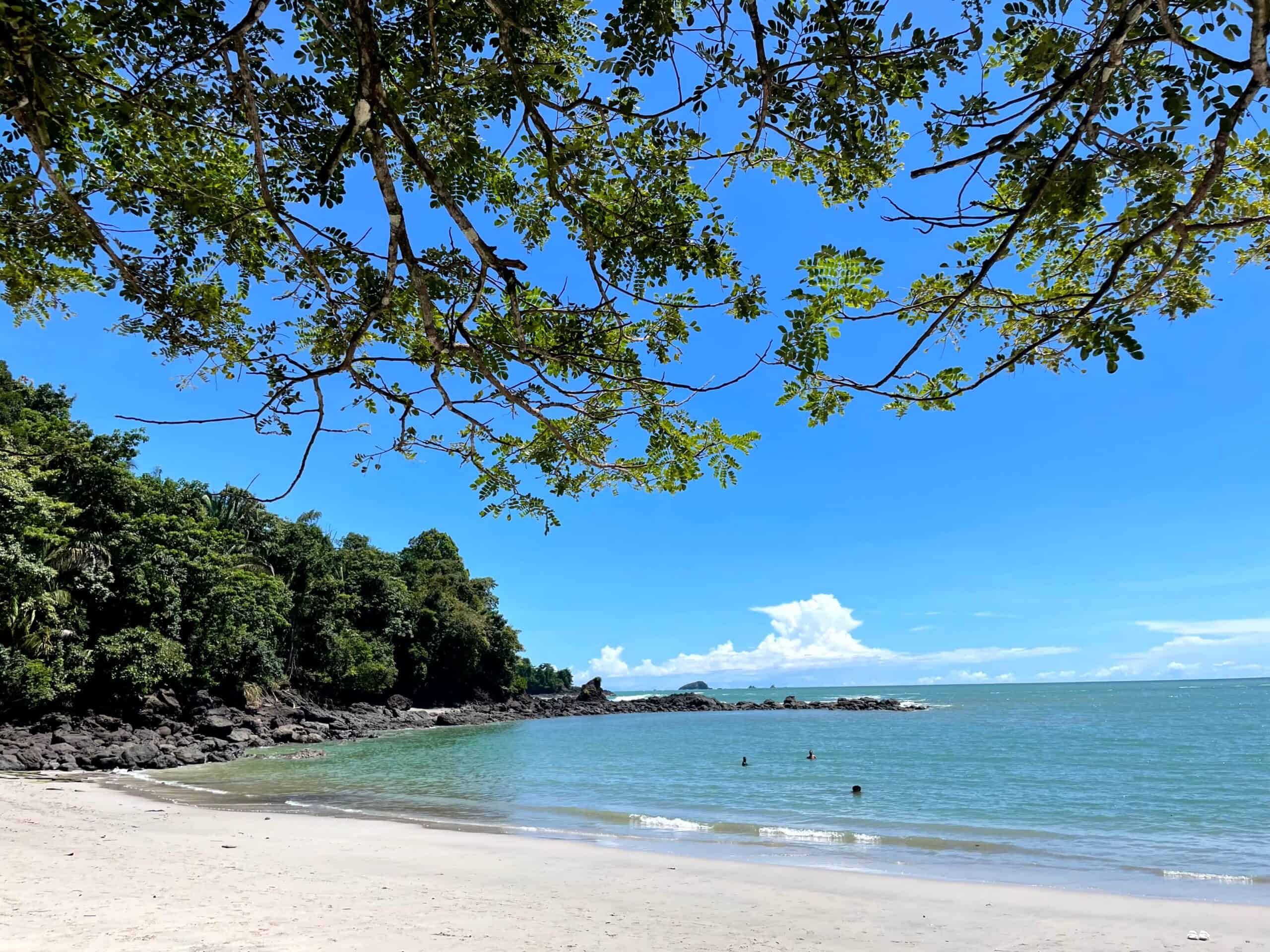
The bay’s gentle waves make it perfect for families and it’s a great place to spot wildlife as it’s surrounded by lush rainforest.
To reach the beach, follow the Main Trail from the entrance to the end, then join the Manuel Antonio Beach Trail. You can also take the Mangrove Trail to the Espadilla Sur Trail, which connects to the other end of the beach.
💡Tip: Never leave your bags unattended because the capuchin monkeys will steal anything they can get their hands on.
Espadilla Sur Beach
Espadilla Sur Beach has the same stunning turquoise water and white sand as Manuel Antonio Beach but tends to be less crowded. Due to strong currents, it’s often not suitable for swimming, but it’s a beautiful spot for sunbathing, walking, and escaping the crowds.
The Espadilla Sur Trail runs parallel to the beach and connects the Manuel Antonio Beach Trail to the Mangrove Trail, with several access points to the beach along the way.
Gemelas Beach
Gemelas Beach is the most secluded beach in the park, tucked away off the main trails. It’s a small, rocky cove with striking natural beauty and far fewer visitors than the other beaches.
Swimming here is not recommended due to strong waves and currents, but it’s a peaceful place to relax and enjoy the scenery.
To get there, take the Main Trail to the end, join the Mirador Trail, and turn right onto the Gemelas Beach Trail. If you’re coming from the lookout at the end of the Mirador Trail, you can also reach the beach via a shortcut on the Los Congos Trail.
Why You Should Book a Guide
Booking a guided tour of Manuel Antiono National Park is highly recommended for first time visitors. Our guide arranged our entry tickets, organised transport, and helped us spot wildlife that we would have missed on our own.
Guides carry high-powered scopes so you can see animals clearly and up close, and they share fascinating information about the local flora and fauna. They also help watch over your bags while you swim which is useful since capuchin monkeys are notorious for grabbing unattended items!
If you’re visiting Manuel Antonio National Park as a day trip, can find excellent guided tours that depart from San José or Jaco. If you’d prefer to save money and arrange your own transport, you can also find tours that depart from the entrance.
🦥 Click Here to Book Your Tour!
What to Bring (and What Not to Bring)
👍 What to Bring
- Reusable water bottle
- Sunscreen and insect repellent
- Swimsuit and towel
- Comfortable walking shoes
- Camera or phone
- Hat and lightweight clothing
👎 What Not to Bring
- Single-use plastics
- Plastic water bottles
- Food or snacks
- Pets
- Drones
- Alcohol
- Loudspeakers
💡Tip: Remember that it’s illegal to feed or touch wild animals in Costa Rica.
Bag Checks
The park enforces its rules strictly. Bags are searched at the entrance to ensure no prohibited items are brought in.
We really appreciated the strict rules as it’s all part of the park’s strong conservation mindset. These measures help protect the wildlife and keep the park pristine.
Where to Eat in Manuel Antonio
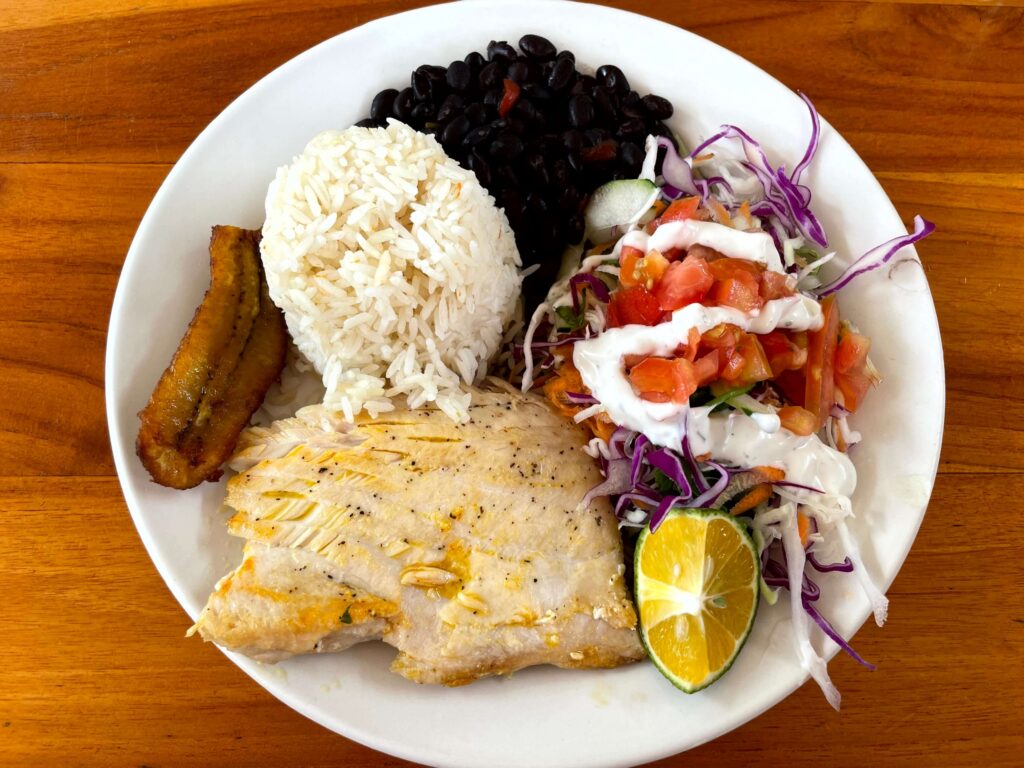
While you can’t bring food into the national park, there is a café inside the park at the end of the main trail. It’s enclosed in a cage to prevent wildlife from sneaking in.
We didn’t eat at the café, but just outside the park entrance, there are several restaurants offering everything from traditional Costa Rican meals to seafood and international dishes. These are a great option for a relaxed lunch after your visit.
Where to Stay in Manuel Antonio
Staying close to Manuel Antonio National Park allows you to arrive early, beat the crowds, and make the most of your time in the area.
There’s a wide range of accommodation options nearby, from luxury resorts to budget-friendly guesthouses. Here are some top picks for every budget:
Luxury – Arenas del Mar
Arenas del Mar is a luxury beachfront eco-resort nestled between rainforest and ocean. It’s one of the few hotels in the area with direct beach access and offers top-tier service, beautiful rooms, and exceptional amenities. It’s on the pricier side, but we’ve heard it’s worth every cent.
📍Book your stay at Arenas del Mar!
Mid-Range – Hotel Costa Verde
This family-friendly resort is famous for its airplane-themed rooms and restaurant. Yes, actual vintage aircraft converted into accommodation and dining spaces! Hotel Costa Verde is close to the beach and offers jungle views and a range of on-site activities.
📍Book your stay at Hotel Costa Verde!
Mid-Range – Mango Moon Villa
Mango Moon Villa offers jungle views and incredible wildlife sightings right from your balcony. The property has a relaxed, boutique feel, with a restaurant, bar, and outdoor pool. The nearest beach is about a half-hour walk from the hotel.
📍Book your stay at Mango Moon Villa!
Budget-Friendly – Mi Zaru Sea View Hotel
This affordable option offers private rooms with ocean views for under $100 USD! Expect peaceful jungle surroundings and regular wildlife sightings. There’s no on-site restaurant at Mi Zaru Sea View Hotel, but there are restaurants close by. It’s about a half-hour walk to the nearest beach.
📍Book your stay at Mi Zaru Sea View Hotel!
Summary
Manuel Antonio National Park truly has it all: scenic beauty, accessible wildlife, relaxing beaches, and well-maintained trails.
Whether you visit independently or with a guide, it’s an unforgettable experience and a must-do when travelling in Costa Rica.