Best Time to Visit Halong Bay: Weather & Crowds Guide
This post contains affiliate links. If you click and make a purchase, I may earn a small commission at no extra cost to you. See my Privacy Policy for more information.
If you’re planning a trip to Vietnam and wondering about the best time to visit Halong Bay, this guide will help you decide when to go based on weather and crowds.
Halong Bay is one of the most popular destinations in Vietnam, but the time of year you visit can make a big difference to your experience. Some months have clear skies and perfect cruise conditions, while others bring heavy rain, fog, or very large crowds.
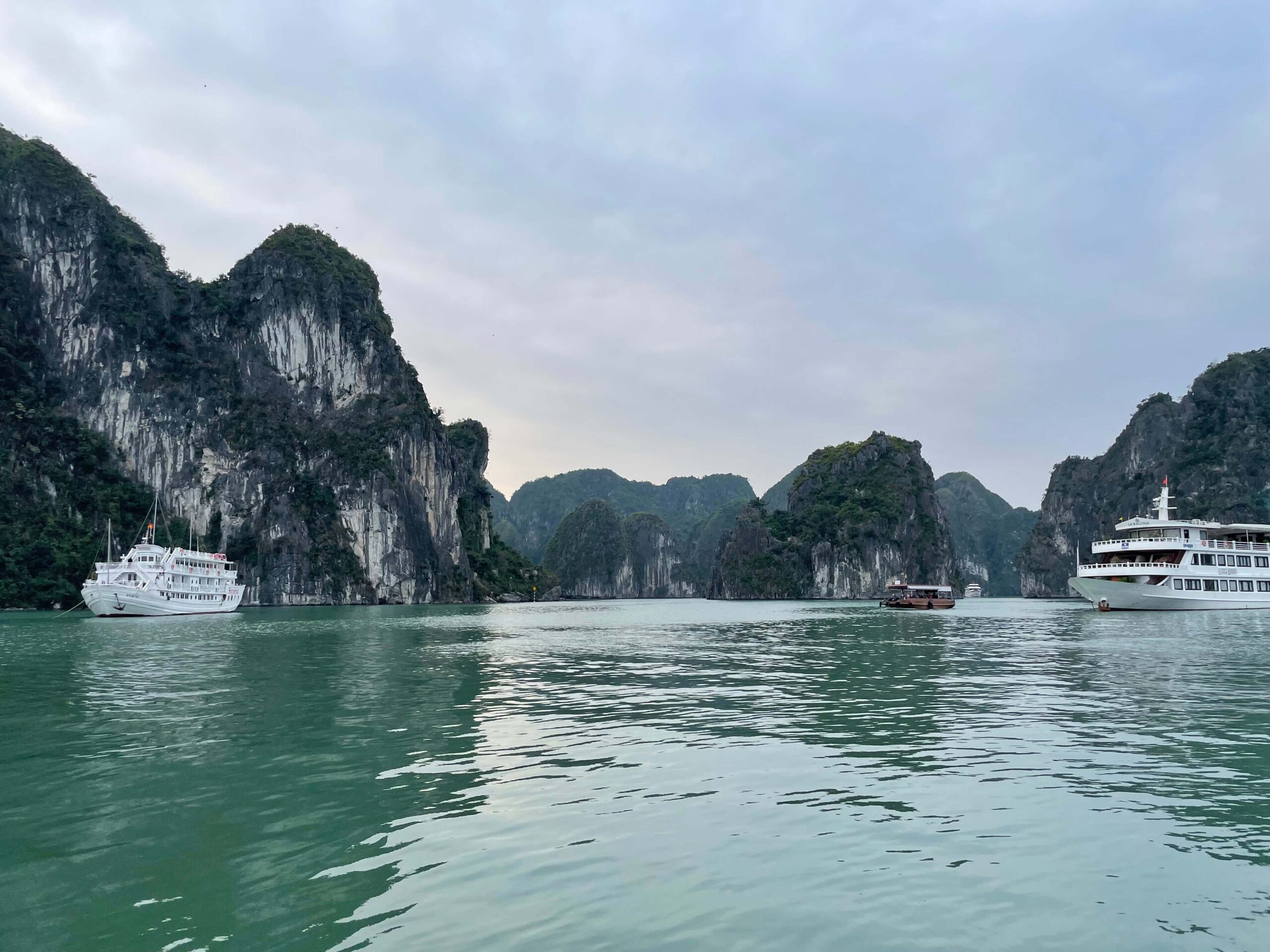
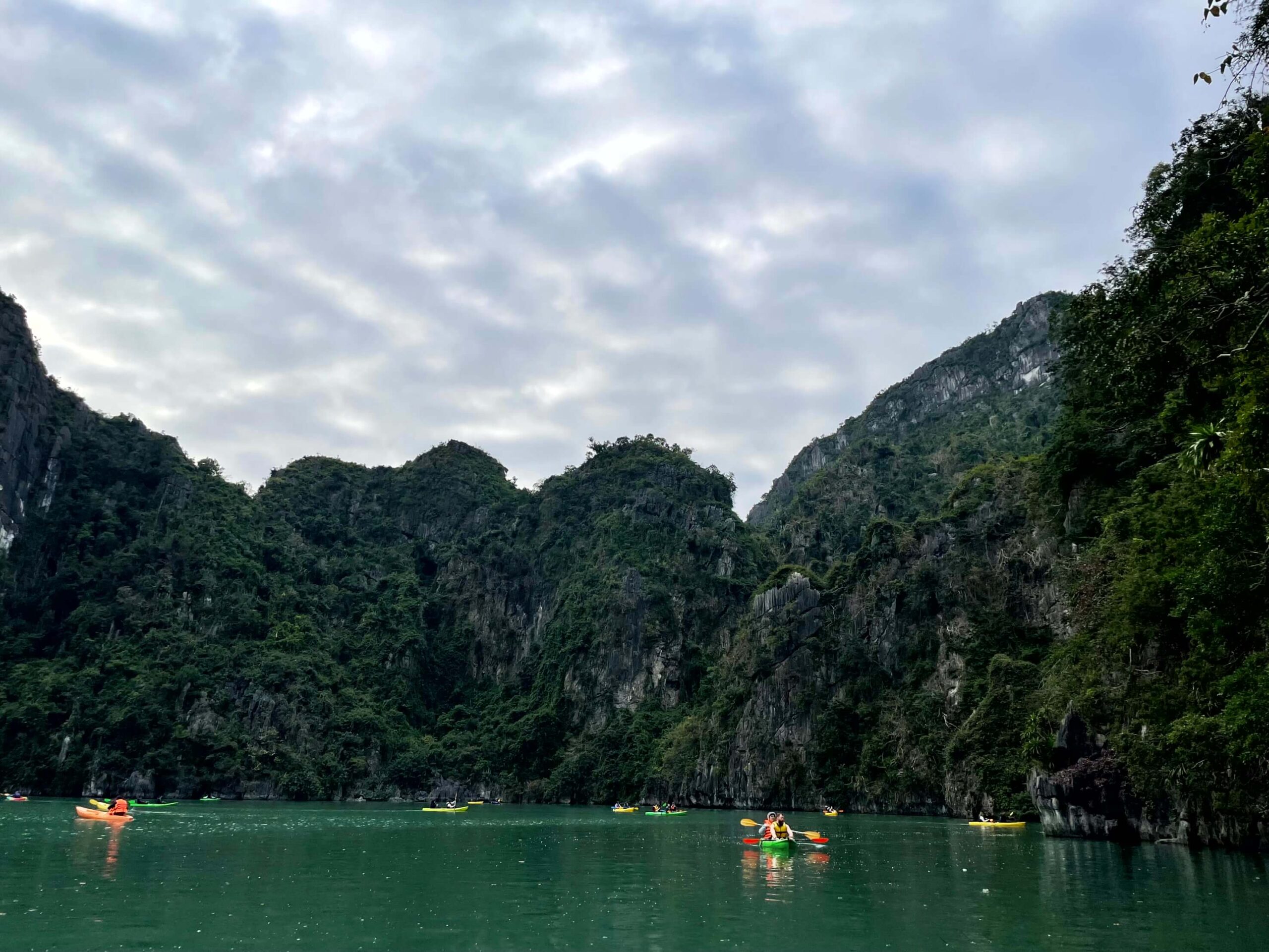
I visited Halong Bay in early January and although the scenery was incredible, the weather was cold and cloudy and the main cruise stops were very crowded. After my trip, I did a lot of research to figure out when I would visit next and what time of year I would recommend to others.
This guide explains Halong Bay weather by month, the best and worst times to visit, and how to choose the right time based on weather, crowds, and budget.
Quick Answer: Best Time to Visit Halong Bay
✨ Best Time Overall: March and November (best balance of good weather and reasonable crowds).
☀️ Best Time for Good Weather: April and October (warm, sunny days, low rainfall, and clear skies).
🛳️ Best Time for Cruises: March, April, October, and November (excellent visibility and comfortable temperatures). Avoid typhoon season (June to September).
🏝️ Best Time for Fewer Crowds: May to September (low season for international visitors due to rainy season). Avoid weekends and Vietnamese public holidays when domestic tourism is high.
💰 Best Time for Budget Travel: May to September (lower cruise prices due to rain, heat, and risk of storms).
Halong Bay Weather Overview
Halong Bay has a humid subtropical climate with four distinct seasons.
While humidity is high year-round, temperatures and rainfall vary significantly depending on the season. This impacts cruise conditions and outdoor activities like swimming, kayaking and hiking.
In general, spring and autumn have the most comfortable weather. Summer is hot and rainy with a risk of severe tropical storms, while winter is cold and often cloudy or foggy.
Below is a quick overview of Halong Bay weather by month, along with typical crowd levels.
Halong Bay Weather by Month
| Month | Weather | Weather | Crowds | Overall |
|---|---|---|---|---|
| Jan | ☁️ Cold, cloudy, dry | Good | Medium* | Good |
| Feb | ☁️ Cold, cloudy, dry | Good | Medium* | Good |
| Mar | 🌤️ Cool and dry | Excellent | Medium | Excellent |
| Apr | ☀️ Warm and sunny | Excellent | High | Excellent |
| May | ⛅ Hot, start of rain | Good | Medium | Good |
| Jun | 🌧️ Hot and rainy | Fair | Medium | Fair |
| Jul | ⛈️ Hot and stormy | Poor | High | Poor |
| Aug | ⛈️ Hot and stormy | Poor | Medium | Fair |
| Sep | ⛅ Warm, fewer storms | Fair | Low | Good |
| Oct | ☀️Warm and sunny | Excellent | High | Excellent |
| Nov | 🌤️Cool and dry | Excellent | Medium | Excellent |
| Dec | 🌥️Cold, mostly cloudy, dry | Good | Medium | Good |
*High during holidays
Halong Bay Weather Charts
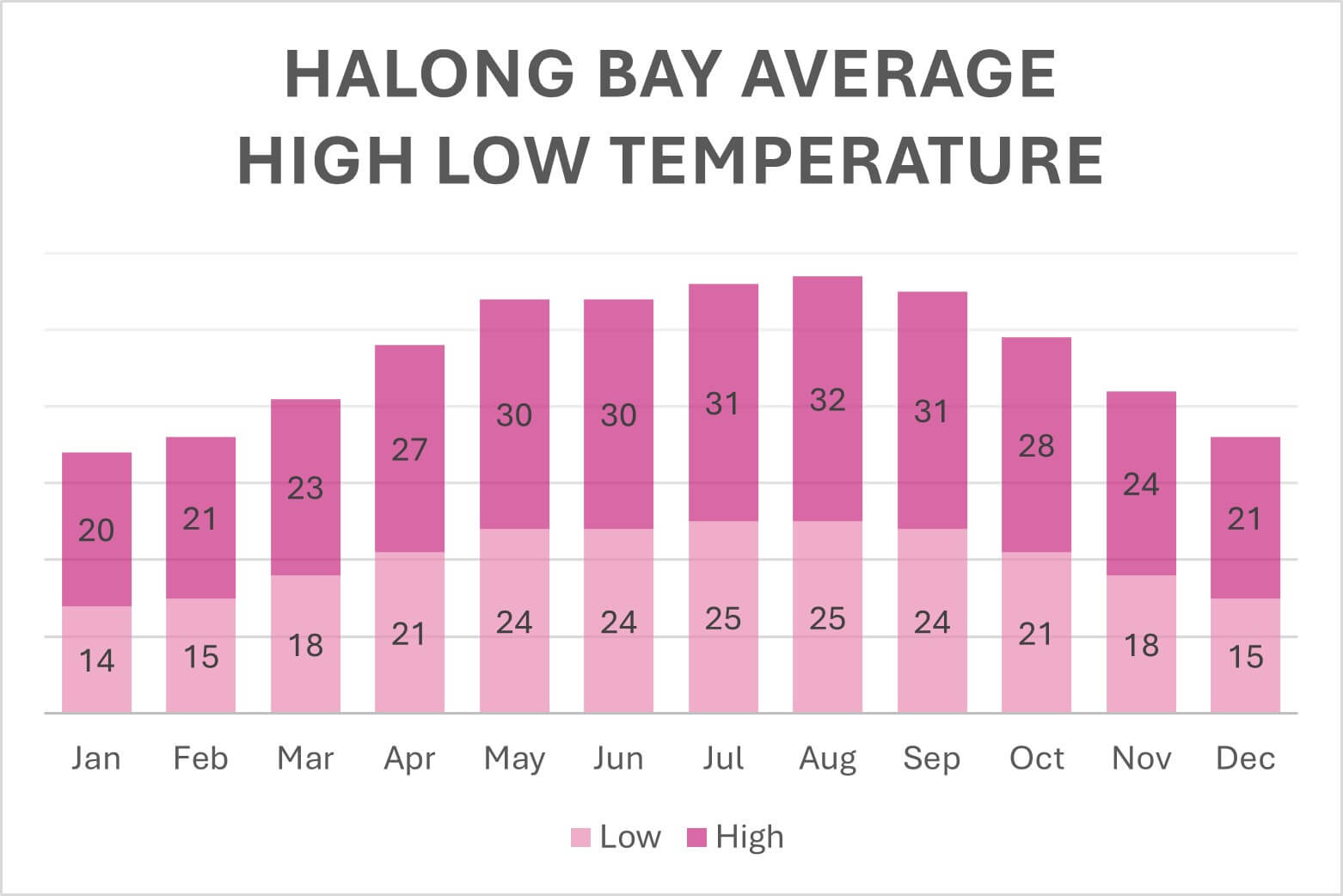
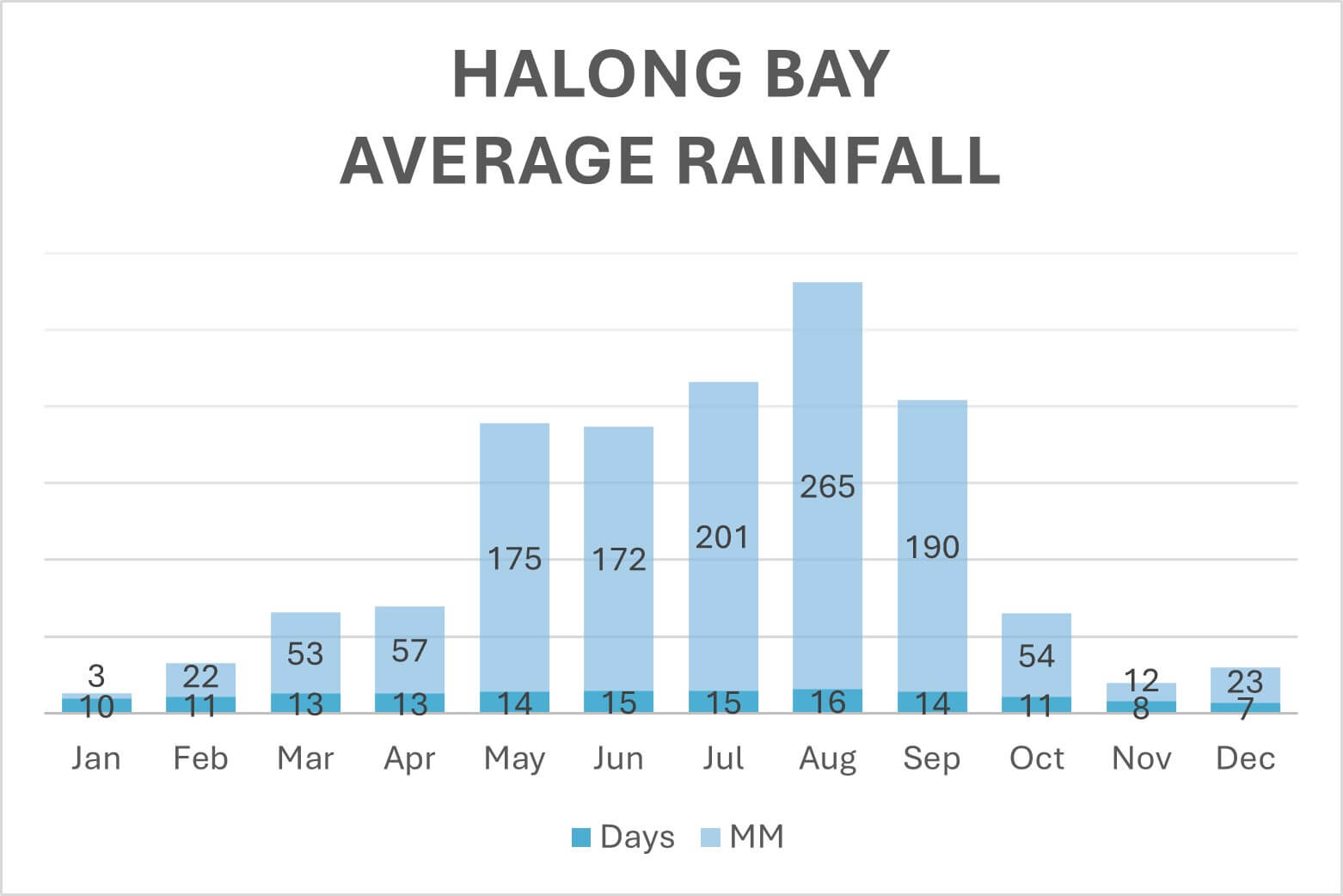
Source: Holiday-Weather.com
☁️ Visiting Halong Bay in Winter (Dec – Feb)
Weather in Winter
Winter in Halong Bay is cold and cloudy, with low rainfall. Some mornings are foggy and atmospheric, but the days are usually grey and overcast.
Cruises still operate normally, but it’s generally too cold for swimming.
December
December in Halong Bay is cold and typically cloudy or partly sunny.
Rainfall is low, so most days are dry and the weather is comfortable for cruising and sightseeing but generally too cold to be in the water.
Average Temperature Range: 15–21°C (59–70°F).
Average Rainfall: 23mm falling over 7 days.
January
January is the coldest month of the year in Halong Bay, with very cold mornings and evenings and usually cloudy or overcast skies.
Rainfall is very low, so conditions are generally good for cruising and sightseeing, but not suitable for water activities.
I visited Halong Bay in January and found it too cold for swimming but comfortable for hiking and visiting caves.
Average Temperature Range: 14–20°C (57–68°F).
Average Rainfall: 3mm falling over 10 days.
February
February is still cold and often cloudy, with low rainfall and occasional light drizzles.
Fog and mist are common, which can reduce visibility but sometimes creates a more atmospheric landscape, particularly in the mornings.
Average Temperature Range: 15–21°C (59–70°F).
Average Rainfall: 22mm falling over 11 days.
Crowd Levels in Winter
Winter is often described as low season in Halong Bay, but this is not entirely accurate because several major holidays fall during this period.
Crowd levels are usually lower in early December and late February, but the bay can be very busy during Christmas, New Year, and Lunar New Year (Tet).
December
Crowds are low to moderate in early December but increase significantly around Christmas and New Year.
January
Early to mid-January is very busy due to New Year. Late January is usually quieter, although it depends on the timing of Lunar New Year (Tet).
When I visited in early January, I found the main cruise stops extremely crowded, especially Sung Sot Cave and Ti Top Island.
February
Crowd levels in Halong Bay can increase significantly during Tet, the Vietnamese Lunar New Year, which usually falls in late January or early February.
Late February is much quieter after the holiday period ends.
Is Winter a Good Time to Visit Halong Bay?
Winter can be a pleasant time to visit Halong Bay if you prefer cooler weather and fewer rainy days.
However, it’s typically very cloudy in winter which can make the water look a bit grey. The weather is ideal for hiking to viewpoints and visiting caves but it’s too cold to swim.
Based on my visit in early January, the scenery was still beautiful, but the weather was cold and grey, and the main attractions felt very crowded due to the holiday period.
The best times to visit in winter are early December and late February, while Christmas, New Year, and Tet are the busiest periods.
🌸 Visiting Halong Bay in Spring (Mar – May)
Weather in Spring
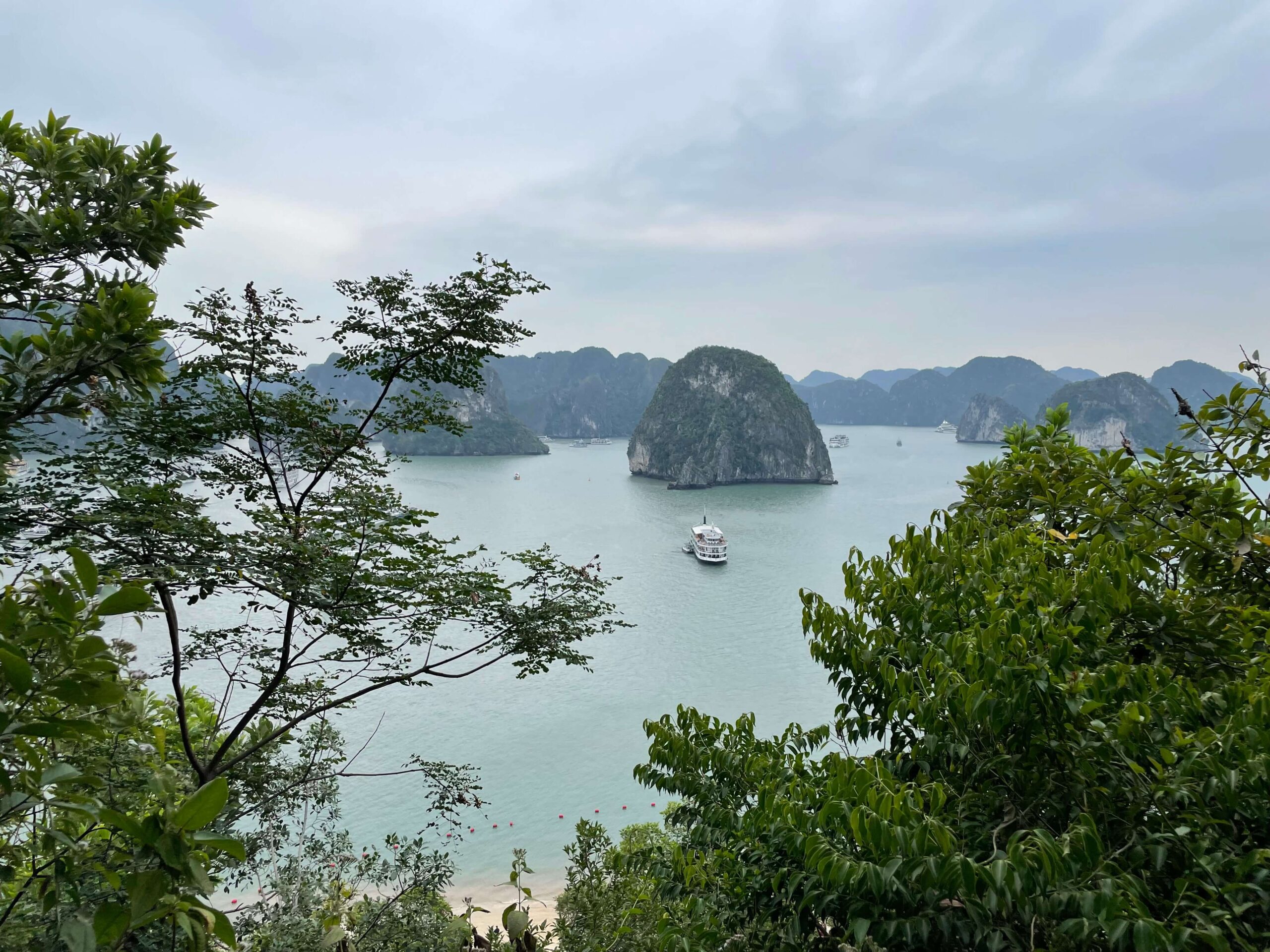
Spring is one of the best times to visit Halong Bay, with mild temperatures, good visibility, and comfortable conditions for cruises and outdoor activities.
The weather generally cool and dry at the beginning of Spring but becomes warmer and more humid throughout the season with rainy season beginning in May.
March
March is one of the best months to visit Halong Bay. The weather is mild and comfortable for outdoor activities with a mix of sunny and cloudy days.
Conditions are good for cruises with improved visibility compared to winter, although it’s often misty in the mornings.
Rainfall is moderate and usually comes as light showers rather than heavy rain or storms.
Average Temperature Range: 18–23°C (64–73°F).
Average Rainfall: 53mm falling over 13 days.
April
April is one of the best months for weather in Halong Bay, with warm temperatures, clear skies, and very good visibility.
Most days are sunny and pleasant, making this an excellent time for cruises and photography.
Conditions are ideal for kayaking, swimming, and island visits, with only occasional short rain showers.
Average Temperature Range: 21–27°C (70–81°F).
Average Rainfall: 57mm falling over 13 days.
May
May is the beginning of rainy season in Halong Bay.
The weather becomes hotter and more humid, with a mix of sunshine, clouds, and afternoon rain. Rain is often short and heavy, rather than lasting all day.
Warmer temperatures make this a good month for swimming and water activities, although storms can occur occasionally.
Average Temperature Range: 24–30°C (75–86°F).
Average Rainfall: 175mm falling over 14 days.
Crowd Levels in Spring
Spring is a popular season for international travellers visiting Vietnam, so crowd levels increase throughout the season.
Visitor numbers are moderate in March but rise significantly in April and early May due to good weather and Vietnamese public holidays.
March
Crowd levels are moderate in March with visitor numbers begin to increase after winter.
However, March is much less crowded than April or early May making it a good time to visit if you want good weather without peak season crowds.
April
April is the busiest month in spring and one of the busiest months of the year in Halong Bay due to the excellent weather.
Cruises often book out and popular attractions can feel very crowded.
It’s best to avoid the end of April when domestic tourist numbers surge due Vietnamese public holidays (Reunification Day on April 30th and Labour Day on May 1st).
May
Early May is very crowded due to the public holiday and crowds remain fairly high throughout May, although generally not as high as April.
Visitor numbers usually start to decrease towards late May as temperatures rise and the rainy season begins.
Is Spring a Good Time to Visit Halong Bay?
Spring is one of the best times to visit Halong Bay. The weather is generally warm and comfortable, and rain is less frequent than during the summer monsoon season.
However, April and early May can be very busy due to good weather and Vietnamese public holidays. I recommend avoiding the end of April and the start of May when domestic tourist numbers increase significantly.
March offers the best balance of good weather and reasonable crowds, with late March to early April being the sweet spot.
☀️ Visiting Halong Bay in Summer (Jun – Aug)
Weather in Summer
Summer in Halong Bay is hot, humid, and rainy. However, there are still many sunny days making it a good time of year for water activities.
The rainy season runs from May to September, with the heaviest rain in July and August.
Summer is also peak typhoon season in northern Vietnam which can sometimes cause cruise cancellations. Typhoon season runs from June to October, with storms most common in July and August.
June
June is hot and humid, with a mix of sunshine, clouds, and short heavy tropical showers. Rain becomes more frequent, but there are still many sunny periods between showers.
June is the start of typhoon season, although storms are less common than in July and August. The sea is warm, making this a good month for swimming and water activities.
Average Temperature Range: 24–30°C (75–86°F).
Average Rainfall: 172mm falling over 15 days.
July
July is very hot, humid, and rainy, with frequent heavy rain and thunderstorms.
This month has the highest risk of tropical storms and typhoons, which can disrupt or cancel cruises, so it is not recommended if your main goal is to do a cruise.
Average Temperature Range: 25–31°C (77–88°F).
Average Rainfall: 201mm falling over 15 days.
August
August has similar weather to July, with very hot temperatures, high humidity, and frequent rain. It has the highest average rainfall of the year, with a mix of sun, clouds, and heavy showers.
There is still a high risk of tropical storms and typhoons, although the storm risk decreases slightly toward the end of the month.
Average Temperature Range: 25–32°C (77–90°F).
Average Rainfall: 265mm falling over 16 days.
Crowd Levels in Summer
Summer is low season for international tourism in Halong Bay and cruise prices are generally lowerdue to the higher risk of bad weather and cancellations.
However, summer is peak season for domestic tourists due to Vietnamese school holidays. This means that Halong Bay can still feel very busy, especially on weekends.
June
Crowd levels are manageable in June, although it can be busy on weekends due to the start of Vietnamese school holidays.
July
Despite the high risk of tropical storms, July has the highest crowd levels of summer being the peak school holiday time. Weekends are especially crowded with domestic tourists.
August
August is slightly less busy since it’s the wettest month and crowds start to decrease towards the end of the month as the Vietnamese school holidays come to an end.
Is Summer a Good Time to Visit Halong Bay?
The combination of high humidity, heavy rain, and potential storms means summer is not usually considered a good time to visit Halong Bay.
However, cruise prices are often lower than during peak seasons, and the heat makes it a good time for swimming and water activities.
Summer can still be a good time to visit if you don’t mind hot weather and occasional rain.
If you plan to travel during summer, June is the best option, before the peak heat and storm risk of July and August.
💡 Tip: Avoid weekends as local crowds increase significantly.
🍂 Visiting Halong Bay in Autumn (Sep – Nov)
Weather in Autumn
Autumn is widely considered to be one of the best seasons to visit Halong Bay.
The weather becomes cooler and drier after the summer monsoon, with lower humidity and less rain.
Overall, autumn offers pleasant temperatures and some of the clearest views of the limestone islands, making it an excellent time for cruising and sightseeing.
September
September is the end of the rainy season, so rainfall starts to decrease but is still relatively high. Storms and typhoons are still possible, especially in early September.
Temperatures are still quite warm, with a mix of sun, clouds, and rain, but the weather usually improves toward the end of the month.
Average Temperature Range: 24–31°C (75–88°F).
Average Rainfall: 190mm falling over 14 days.
October
October has some of the best weather of the year in Halong Bay, with warm days, lower humidity, and significantly less rain than September.
The days are often clear and sunny, creating excellent visibility across the bay, which makes October one of the best months for cruises and photography.
Average Temperature Range: 21–28°C (70–82°F).
Average Rainfall: 54mm falling over 11 days.
November
The weather is still excellent in November, with cooler temperatures and dry conditions. Visibility is often very good, and tropical storms are rare at this time of year.
November is slightly cooler than October but still warm enough for water activities.
Average Temperature Range: 18–24°C (64–75°F).
Average Rainfall: 12mm falling over 8 days.
Crowd Levels in Autumn
Autumn is peak season for international visitors in Halong Bay because of the great weather. Cruises often sell out well in advance, especially in October and November.
Crowd levels increase throughout the season, starting relatively low in September, rising to peak levels in October, and then easing slightly in November, although it is still high season.
September
Crowds are relatively low in September, especially at the beginning of the month.
This is because the domestic summer peak has ended, but the international peak season has not fully started yet. Visitor numbers begin to increase later in the month as the weather improves.
October
October is one of the busiest months of the year in Halong Bay due to the excellent weather.
Cruises often book out, and popular attractions can feel crowded during the day.
November
November is still high season, but crowds are usually slightly lower than October as temperatures begin to cool.
Crowd levels decrease towards the end of the month.
Is Autumn Good Time to Visit Halong Bay?
Autumn is often considered the best time to visit Halong Bay overall. The combination of clear skies, comfortable temperatures, and low rainfall creates excellent conditions for cruising, sightseeing, and photography.
However, each autumn month is slightly different. September has lower crowds, but the weather can still be rainy, especially early in the month.
October has the best weather of the year but also the highest crowds while November offers an excellent balance with great weather and less slightly fewer visitors.
💡Tip: Book your cruises well in advance if travelling in October as this is peak season.

Frequently Asked Questions
What is the best month to visit Halong Bay?
The best months to visit Halong Bay are March and November, as they offer the best balance of good weather and slightly lower crowds. April and October have the best weather overall, but they are also the busiest months.
What is the worst time to visit Halong Bay?
The worst time to visit Halong Bay is usually July and August due to heavy rain, high humidity, and the risk of typhoons, which can sometimes cause cruise cancellations.
When is the rainy season in Halong Bay?
The rainy season in Halong Bay runs from May to September, with the heaviest rainfall in July and August.
When is typhoon season in Halong Bay?
Typhoon season in Halong Bay typically runs from June to September, with the highest risk of storms in July and August.
What is the cheapest time to visit Halong Bay?
The cheapest time to visit Halong Bay is during the summer months (June to August), when cruise prices are lower due to the heat, rain, and risk of storms.
Is Halong Bay crowded year-round?
Halong Bay is generally fairly crowded year-round, but some months are busier than others. The most popular months are April and October, which have the best weather. It also gets very busy during Christmas, New Year, and Lunar New Year (Tet).
Summer is the low season for international visitors, but weekends and school holidays are still busy with domestic tourists. If you want fewer crowds, consider visiting Lan Ha Bay or Bai Tu Long Bay instead, which are quieter areas near Halong Bay.
How many days do you need in Halong Bay?
A typical stay in Halong Bay involves spending 1 or 2 nights on a cruise. It’s possible to do a day trip from Hanoi, but an overnight cruise is the best way to experience the bay.
Conclusion: Best Time to Visit Halong Bay
The best times to visit Halong Bay are spring (March to April) and autumn (October to November), when the weather is warm, rainfall is low, and visibility across the bay is at its best.
If you want the best weather, visit Halong Bay in April or October. If you want good weather with slightly fewer crowds, March and November are excellent choices.
For lower prices, summer can be a good option, although you’ll need to be flexible due to the weather and possible storms. Summer is also peak season for domestic tourism with weekends being especially busy.
Winter is cooler and often cloudy, but it can still be a pleasant time to visit if you prefer cooler temperatures and don’t plan to swim. However, it gets busy during holidays.
Overall, I recommend visiting Halong Bay in March or November for the best combination of weather and crowds.
Ready to start planning your trip? Check out the best Halong Bay cruises!
Read More About Vietnam
🛳️ Halong Bay Cruise Review: Is Halong Bay Worth Visiting?
🌄 6 Best Halong Bay Cruises: Top Picks for 2026
🚌 How to Get to Halong Bay: A Complete Transportation Guide
🌺 Vietnam Itinerary: The Perfect 7 Days in Northern Vietnam (Coming Soon)
🪻 15 Best Things to Do in Hanoi Vietnam (Coming Soon)
🛏️ Where to Stay in Hanoi Vietnam (Coming Soon)